
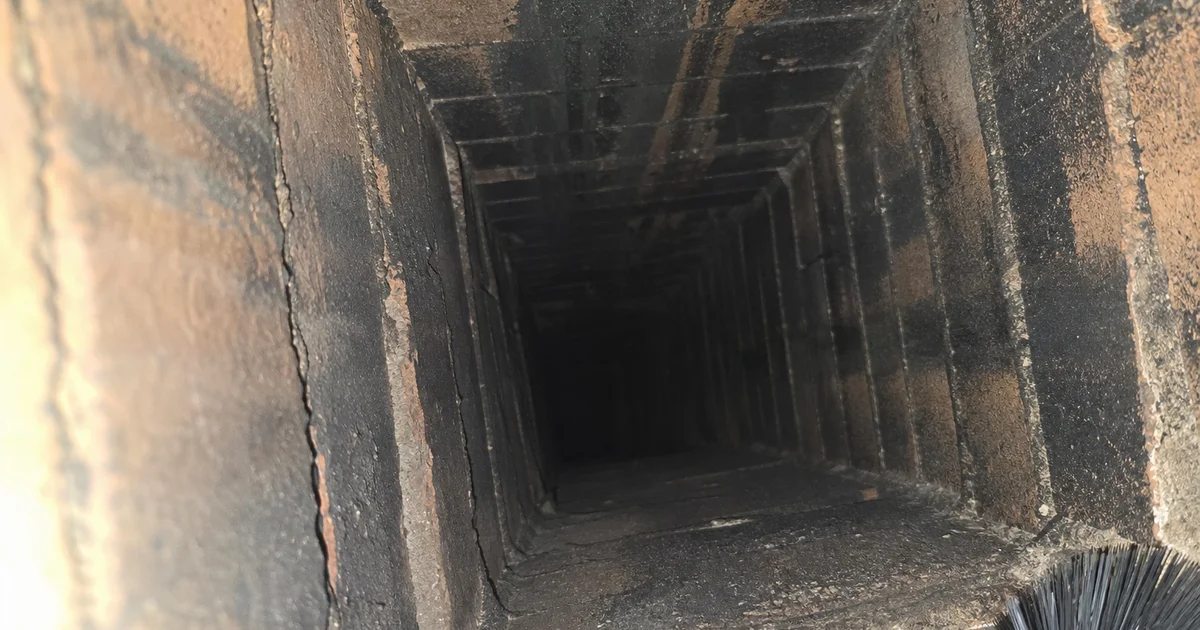
Every wood fire you burn deposits a residue inside your chimney called creosote. It doesn’t stay the same over time. It progresses through three distinct stages, each more flammable and harder to remove than the last. Understanding which stage your chimney is in is the difference between a routine sweep and a chimney fire waiting for the right night.
Stage 1: Powdery Soot
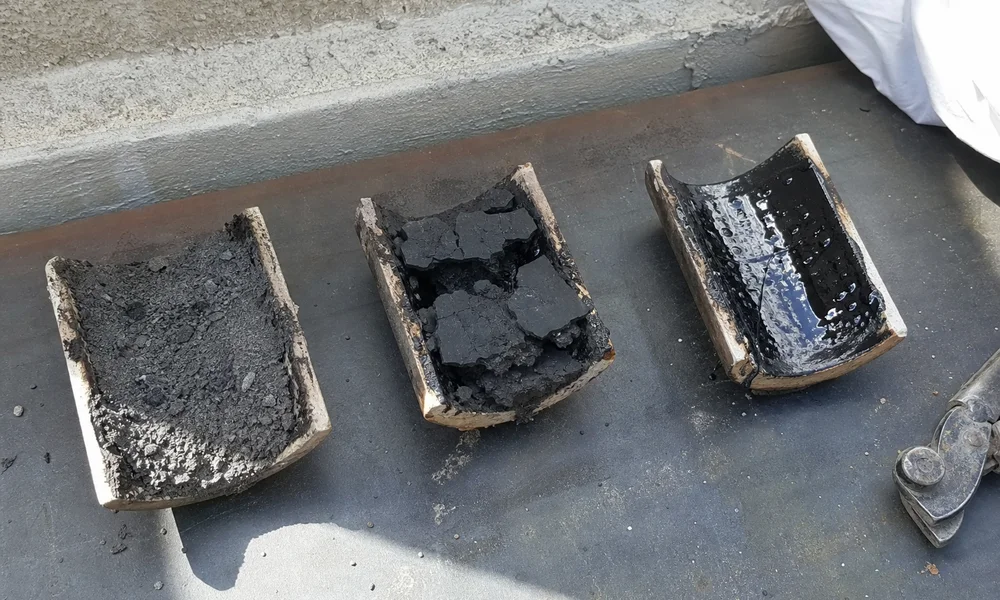
Light, dry, and gray-black, Stage 1 creosote looks and behaves like fine ash. You can brush it off flue tile with a stiff brush and it wipes away without much effort. It’s what forms during hot, efficient fires with well-seasoned wood.
Fire risk: Low, but not zero. Any accumulation can ignite under the right conditions.
Removal: Standard rotary sweeping with brushes. Included in every routine chimney sweep we do.
Stage 2: Flaky, Tar-Like Creosote
If Stage 1 gets neglected, or if you burn wet wood or run smoldering fires that cool the flue too quickly, deposits shift to Stage 2. Now the creosote is sticky, shiny in places, and forms in flakes or crusts on the flue walls. It’s black, has some tar character, and doesn’t brush off cleanly.
Fire risk: Moderate to high. This is the stage where minor chimney fires start.
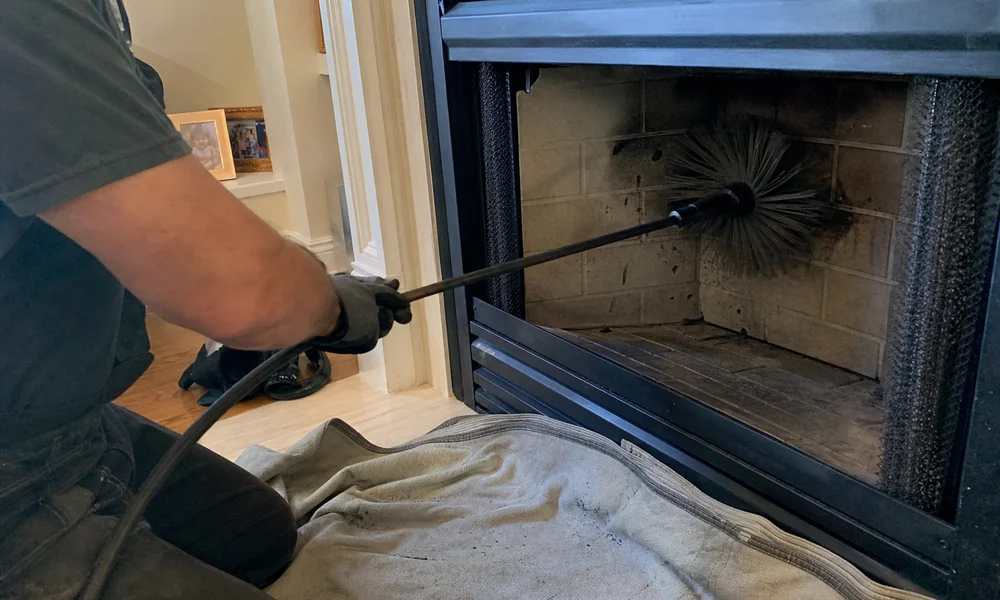
Removal: Requires more aggressive rotary tools and longer sweep time. A pro’s HEPA vacuum contains the mess.
Stage 3: Glazed Creosote
The worst version. Glazed creosote looks like hardened black tar or lacquer coating the flue wall. It is essentially concentrated fuel, welded onto the inside of your chimney. Any spark that reaches it can ignite a chimney fire that burns at 2,000°F+ — hot enough to warp flue liners, crack tiles, and set framing on fire even through masonry.
Glazed creosote forms when Stage 2 gets baked on repeatedly, especially in oversized or cold flues where combustion gases condense before they exit.
Fire risk: Severe. The overwhelming majority of destructive chimney fires involve Stage 3 creosote.
Removal: Rotary power sweeping is not enough. Removal usually requires specialized cutting tools (like Poulton PowerSweeping heads) and often chemical treatments (like PCR) applied over multiple visits. In some cases the flue must be relined because Stage 3 damage has compromised the liner.
How Fast Does Creosote Move Through the Stages?
There’s no universal answer. Some homeowners burning dry, seasoned oak in a modern EPA-certified stove might see only Stage 1 buildup for years. Others burning green wood in an oversized fireplace can reach Stage 3 in a single season.
Variables that speed up creosote formation:
- Wet or unseasoned wood (below 20% moisture content)
- Slow, smoldering fires (low burn temperature)
- Oversized or cold flues (combustion gases condense)
- Restricted air supply (starved combustion)
- Long horizontal or complex flue runs
Per NFPA 211, the professional standard is to have your chimney inspected annually and swept whenever creosote reaches roughly 1/8 inch — regardless of which stage it looks like.
Prevention
You can’t eliminate creosote — burning wood inherently creates it — but you can minimize the rate of buildup:
- Burn only seasoned wood (below 20% moisture content, split and dried at least 6 months)
- Run hot, efficient fires; avoid long smoldering burns overnight
- Keep the damper fully open until the fire is well established
- Have the chimney swept annually or when buildup reaches 1/8 inch
- Consider a Level 2 video inspection every few years to catch hidden buildup
When to Call
If you notice a hot campfire smell from a cold fireplace, hear roaring or crackling sounds from the chimney during a fire, or see thick black staining at the top of the flue, book an inspection immediately. Those are classic signs of Stage 2 or Stage 3 creosote and often of an active chimney-fire risk.
Ready to book? Schedule a sweep or read about our chimney sweeping service in central Connecticut.