
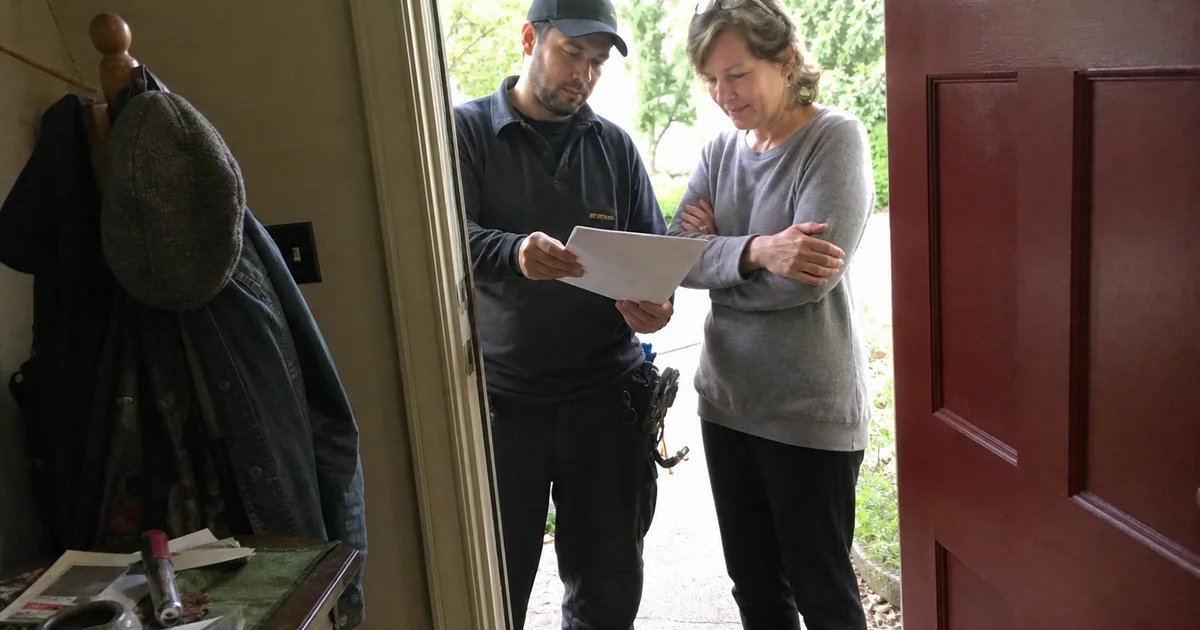
Every fall, the same pattern hits central Connecticut neighborhoods: unmarked vans knocking door-to-door offering “special chimney sweep deals,” fly-by-night operators inventing urgent damage, and homeowners paying for work that either wasn’t done or wasn’t needed.
You don’t have to be an expert to avoid the scam. You just need to know what to look for.
Red Flags (In Order of Severity)
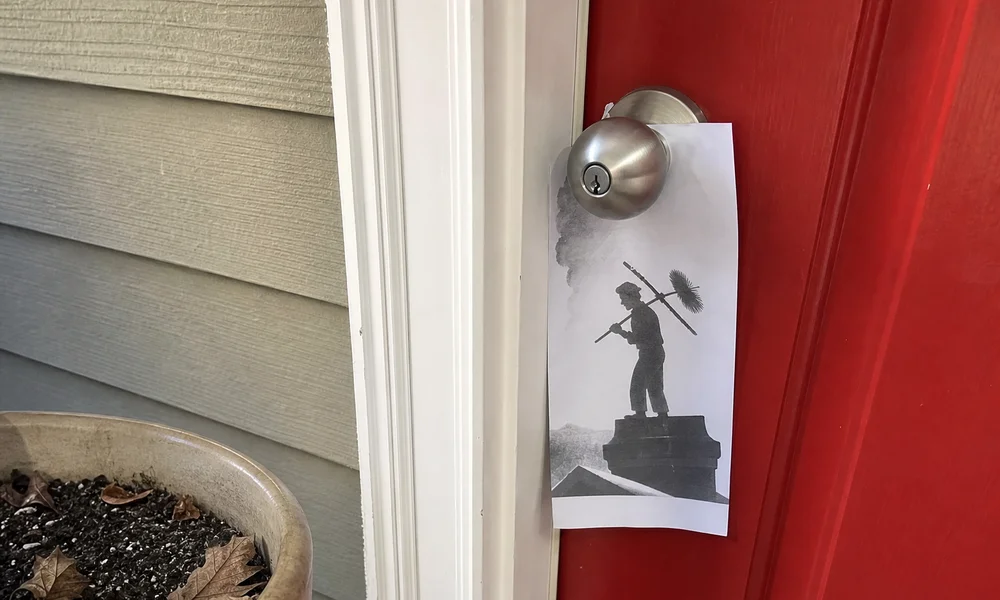
Cold-calling your street. Legitimate CSIA-certified sweeps don’t roll into a neighborhood knocking on doors. They’re booked by referrals, reviews, and returning customers. Someone offering to “check your chimney real quick since we’re in the area” is the single biggest warning sign.
Unmarked vehicles or personal cars. Real sweeps drive branded, insured company trucks with proper equipment. A guy in a personal pickup with a bag of brushes is not running a chimney business.
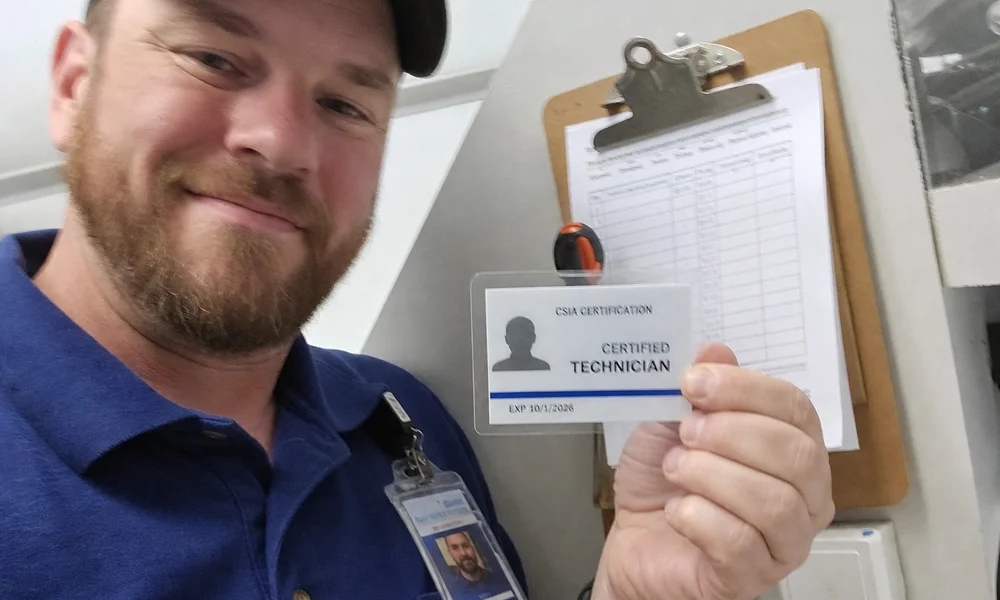
No CSIA certification. The Chimney Safety Institute of America issues personal credentials to certified sweeps. Ask for the card. Every real CSIA sweep carries theirs.
Pressure to sign or pay on the spot. Real sweeps write quotes, email them, and give you time. “This has to be fixed today or your chimney will collapse” is a scam script.
Cash-only or refused credit cards. Legitimate businesses take credit cards, financing (Synchrony), and provide written invoices. Cash-only is a red flag.
Prices that seem too good to be true. A $49 “chimney sweep special” almost always turns into an inflated bill once they’re inside.
The Classic Scam Playbook
- The bait. Cold-call door knock or a $49 sweep coupon on Facebook.
- The switch. Once inside, they “discover” massive damage — a cracked crown, a collapsed liner, imminent fire risk.
- The pressure. The work must happen today. Discount if you sign now.
- The rip. They collect payment (often cash) and either do nothing, do shoddy work, or vanish.
Why CSIA Certification Matters
The Chimney Safety Institute of America is the industry’s non-profit certifying body. To hold the CSIA Certified Chimney Sweep credential, a technician has to pass a written exam covering NFPA 211, chimney safety, and sweeping technique — and renew every three years with continuing education.
Non-certified sweeps might be honest and skilled. Certified sweeps have proven baseline competence and have a certification that can be revoked if they behave badly. Verify a sweep at csia.org.
Connecticut Licensing & Insurance
In Connecticut, chimney contractors performing masonry or structural work should be registered with the CT Department of Consumer Protection and carry:
- General liability insurance (typically $1M+)
- Workers’ compensation for employees
- Auto insurance on branded vehicles
Ask for a copy of the certificate of insurance. Real companies produce it without hesitation.
Questions to Ask Before Hiring
- Are you CSIA Certified? Can I see the card?
- Are you a member of the National Chimney Sweep Guild (NCSG)?
- Are you licensed and insured in Connecticut?
- Do you provide written estimates?
- Do you document findings with photos?
- What’s your physical business address?
- Can I read your reviews on Google or the BBB?
- How long have you been in business locally?
Any real chimney company will answer all of these in five minutes. Scammers will get uncomfortable at question three.
If You’ve Already Been Scammed
- File a complaint with the Connecticut Department of Consumer Protection
- File a Better Business Bureau complaint
- Post an honest review to warn neighbors
- Consider small claims court for amounts up to $5,000 in CT
Get an Honest Second Opinion
If a door-to-door sweep told you something is urgently wrong with your chimney, get a second opinion from a CSIA-certified local company before spending a dollar. We offer free virtual assessments precisely for situations like this — send us their quote and a few photos, and we’ll tell you honestly whether the work is real.