
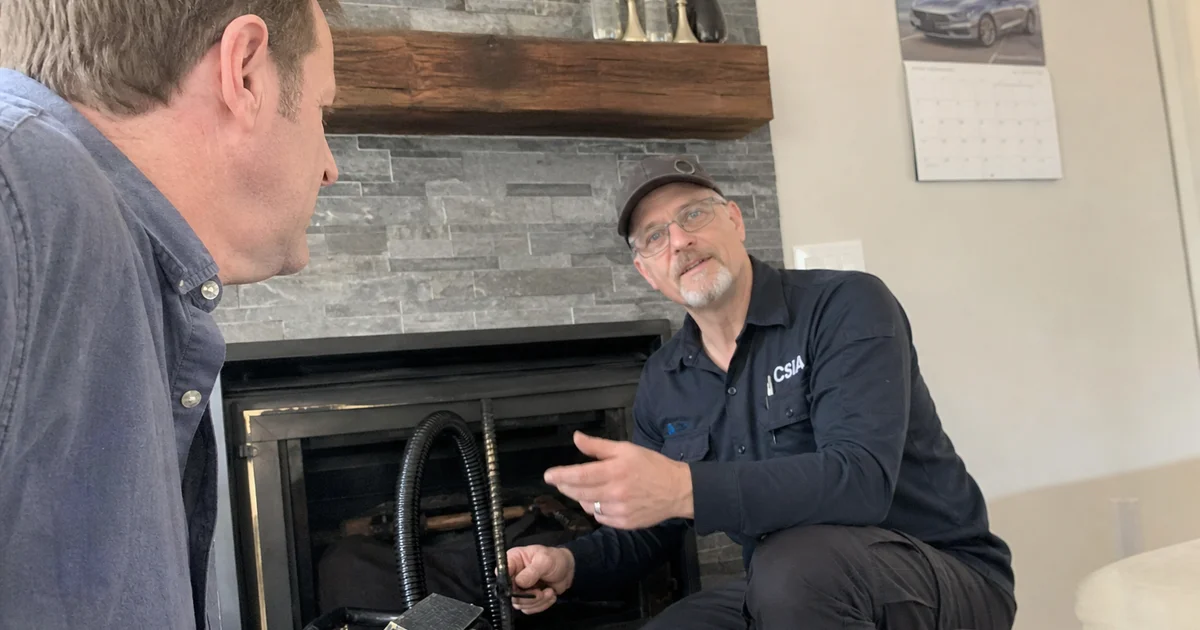
The short answer: inspect once a year, sweep when creosote reaches about 1/8 inch. That’s the professional standard per NFPA 211 and CSIA. But the practical answer depends on how you use your chimney, what appliance it serves, and where in Connecticut you live.
The NFPA 211 Standard
The National Fire Protection Association’s Standard 211 covers chimneys, fireplaces, vents, and solid-fuel-burning appliances. It’s what CSIA-certified sweeps follow. Two rules matter here:
Inspection: annual. Every chimney, in every home, every year. This applies whether you burn wood every night or once a season. It applies to gas and oil flues too.
Cleaning: usage-based. Sweep whenever combustion residue (creosote, soot, or corrosive gas byproducts) reaches roughly 1/8 inch of thickness on the flue walls, or whenever the appliance manufacturer specifies more frequent service.
What “Once a Year” Usually Means
For most central Connecticut homes:
- Regular wood-burning fireplace or stove: Sweep and inspect once a year — usually in late summer or early fall before the first cold snap.
- Occasional-use fireplace: Inspect once a year; sweep every 1–2 years depending on what the inspection finds.
- Gas fireplace or gas furnace flue: Inspect once a year; sweep every 1–3 years to clear corrosive byproduct buildup.
- Oil furnace flue: Inspect and clean annually — oil produces corrosive soot that damages masonry flues fast.
- Pellet stove: Inspect once a year; sweep once or twice a year depending on run hours.
When to Schedule More Often
Bump the frequency if you:
- Burn wet or unseasoned wood
- Run long overnight smoldering fires
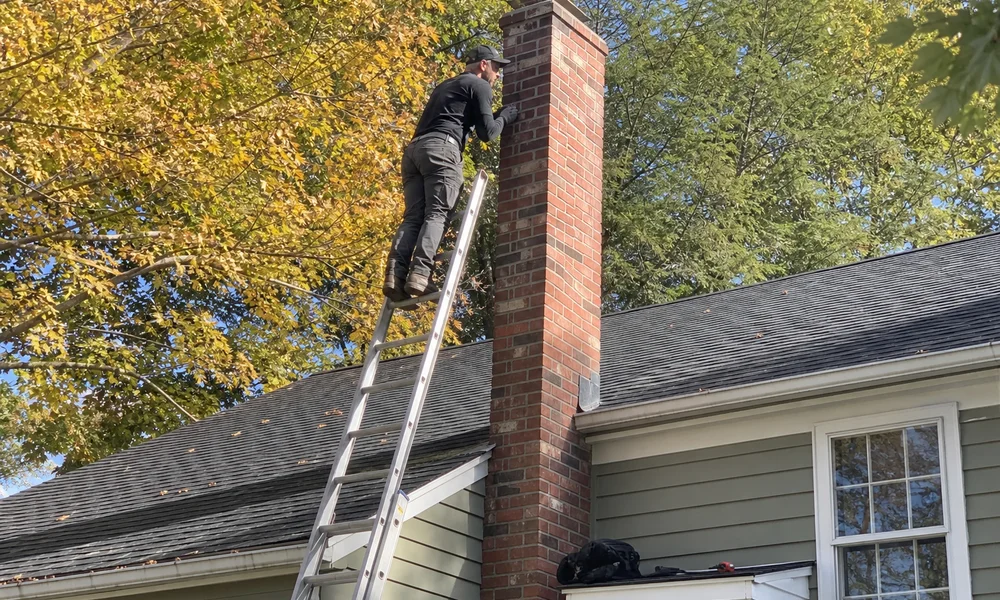
- Have an older masonry chimney with unlined or clay-tile flue
- Heat primarily with wood (multiple cord loads per year)
- See soot or debris falling into the firebox between visits
- Notice a strong campfire smell when the fireplace isn’t in use
When to Book Immediately (Not Wait for Annual)
Some symptoms mean call this week, not next quarter:
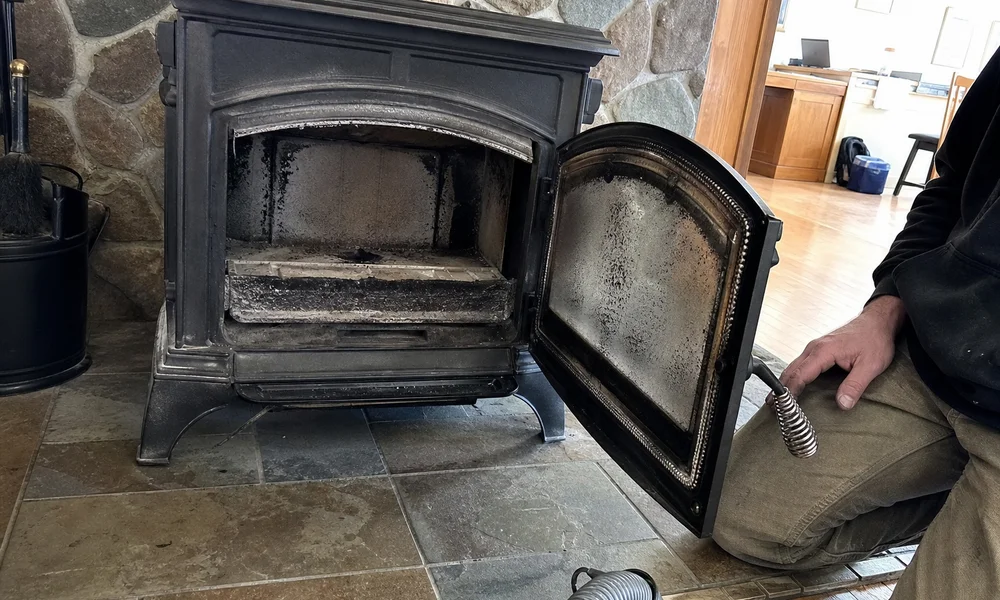
- Smoke backing into the room during a fire
- Water dripping into the firebox during rain
- A leaning chimney or visible masonry cracks
- Any suspected chimney fire (roaring sound, sparks from top)
- Carbon monoxide alarm activation
- After a lightning strike or major storm event
Best Time of Year in Connecticut
For central Connecticut homeowners, late July through early September is the sweet spot. Reasons:
- Availability. Chimney sweeps are booked solid from mid-September onward.
- Weather for repairs. If the inspection finds a cracked crown or bad flashing, warm dry weather is essential for masonry work.
- Ready for first fire. You want the chimney cleared and safe before Halloween, not December.
Level 1 vs Level 2 vs Level 3
Every annual visit doesn’t have to be a full-blown inspection. Typical cadence:
- Level 1 — every annual sweep (visual check of accessible parts)
- Level 2 — every few years, and any time you’re buying/selling, changing appliances, or after a chimney event (adds a video scan)
- Level 3 — only when Level 1 or 2 findings require deeper investigation
See our guide on chimney inspection levels.
Book Yours
Ready to schedule? Book online or read more about our chimney inspection service and chimney sweeping service in central Connecticut.