
Your chimney’s flue liner is the layer that keeps combustion gases inside the chimney and away from your home’s structure. When it’s damaged — cracked clay tiles, corroded metal liner, gaps at the joints — heat and carbon monoxide can escape into wall spaces and framing, and chimney relining is the fix. Here’s how to spot a compromised liner.
Sign 1: Flue Tile Shards in the Firebox
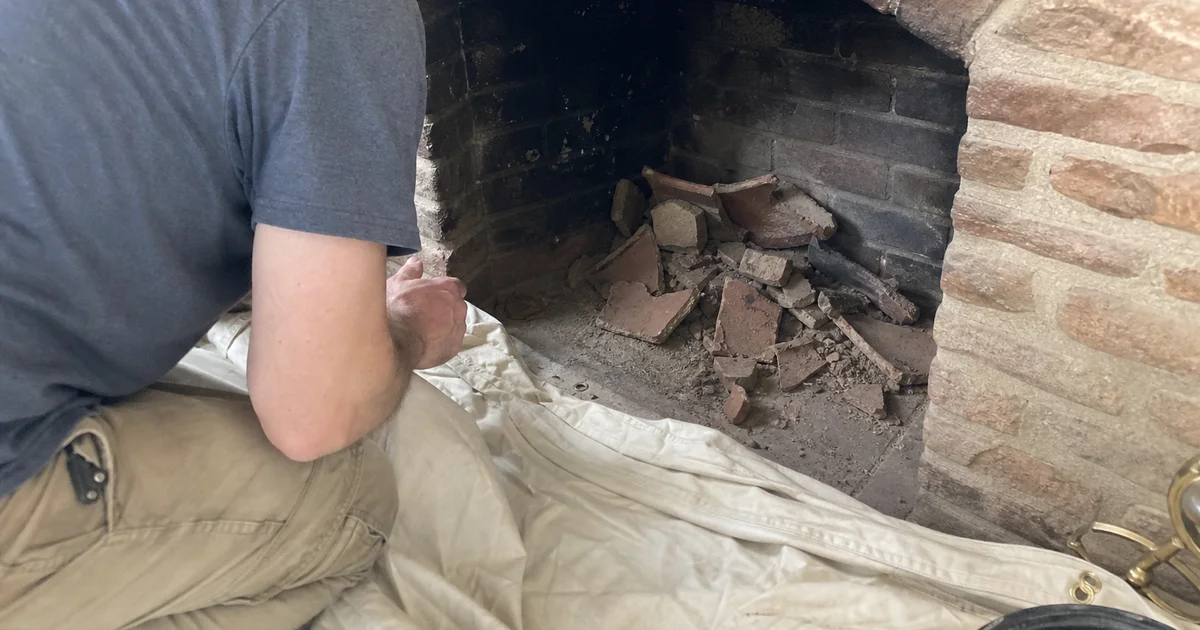
The most obvious sign. If you find pieces of terracotta or clay tile in the bottom of the firebox, they came from a cracked flue tile above. This is a stop-using-the-fireplace-until-inspected situation.
Sign 2: Draft Problems That Don’t Improve After Cleaning
Smoke back-up that a chimney sweep doesn’t fix often traces to liner damage — cracks that disrupt the smooth interior flow, gaps that leak draft pressure, or partially collapsed sections that restrict airflow.
Sign 3: Carbon Monoxide Alarm Activity
Especially when the alarm goes off during furnace or fireplace operation and there’s no other obvious cause. Cracked liners are a leading pathway for CO to escape the chimney into the home. See our CO safety guide for what to do.
Sign 4: Water Stains on Adjacent Walls
A cracked liner lets rainwater that enters through the top penetrate through the chimney walls into your interior. Water stains on walls next to the chimney chase, especially after storms, can indicate liner damage combined with a cap or crown problem.
Sign 5: Signs of a Prior Chimney Fire
Chimney fires often damage liners without homeowners realizing. Signs from a past fire:
- Puffy, honeycomb-textured creosote
- Warped or discolored damper
- Cracked or missing pieces of flue tile
- Discolored exterior brick above the roof
- Bulging or separated masonry
Any of these means a Level 2 inspection immediately, and probably relining.
Sign 6: Aging Metal Liner Corrosion
If your chimney has an existing metal liner and it’s more than 20–30 years old (or was installed on an oil appliance without proper corrosion resistance), the liner may be corroded through in places invisible from the firebox.
How Damage Gets Confirmed
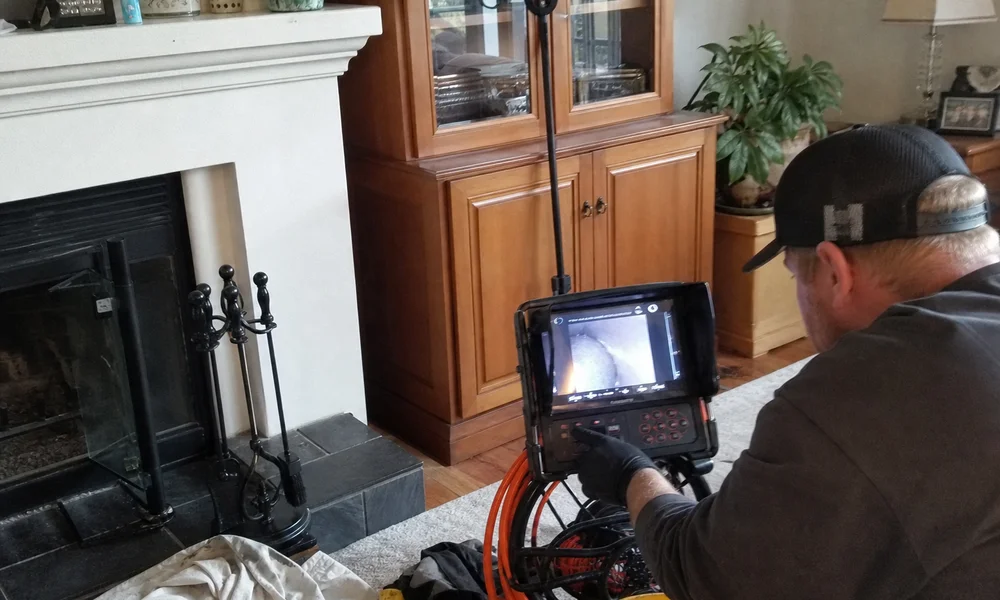
Every one of these signs requires a Level 2 video inspection to confirm. See our inspection levels guide for details, or book directly.
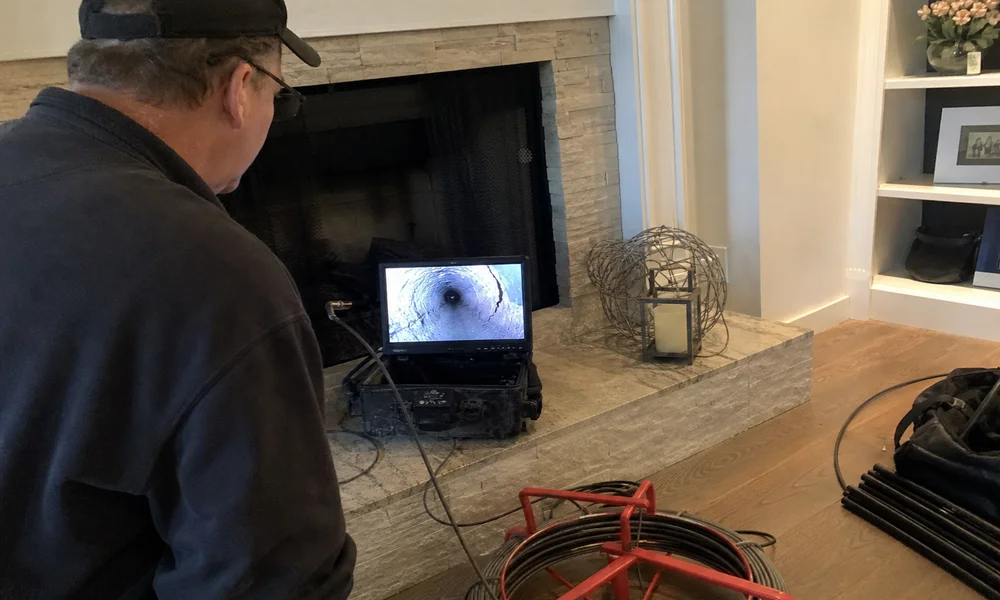
The video scan drops a camera down the flue and shows you exactly what’s happening — cracks, gaps, corrosion, missing mortar. We record it and share it with you.
What Happens Next
If the scan confirms damage, we recommend one of two options based on the extent:
- HeatShield cerfractory sealant for mostly-sound clay tile with cracks or joint problems
- Stainless steel sleeve relining for structurally failed liners
Both restore safety and drafting. See our chimney relining service for details.
Book an Inspection
Any suspected liner damage means schedule an inspection this week — before the next fire. Contact us or read more about our inspection service.
Chimney Relining & HeatShield
Stainless steel liner installation and HeatShield cerfractory repair to restore structural integrity and safe drafting in cracked or deteriorated flues.
Learn About Chimney Relining