
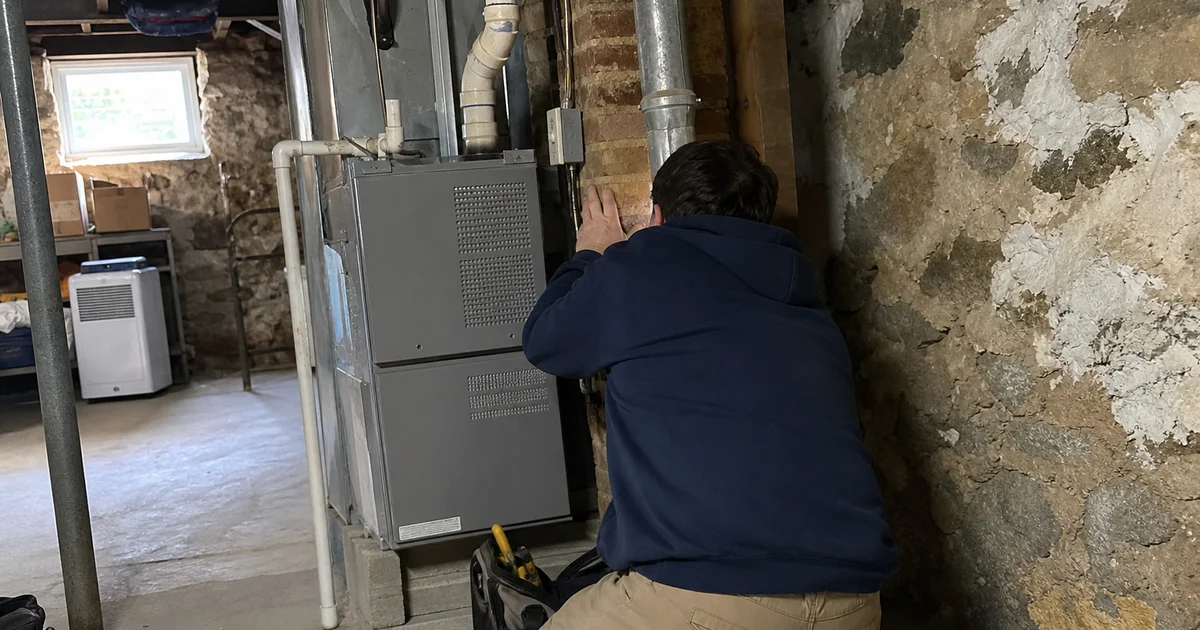
If your home’s heating system vents into a masonry chimney — old gas furnace, oil-fired boiler, older-style gas water heater — the question of whether it needs a chimney liner isn’t optional. It affects safety, appliance efficiency, and code compliance, and it’s the core of our chimney relining work. Here’s how it works.
Why Gas and Oil Appliances Attack Chimneys Differently Than Wood
Wood-burning appliances produce mostly dry combustion products at high temperatures. Gas and oil produce corrosive condensation — water vapor mixed with sulfuric acid (oil) or nitric acid (gas) — that condenses on the interior walls of a cold masonry flue.
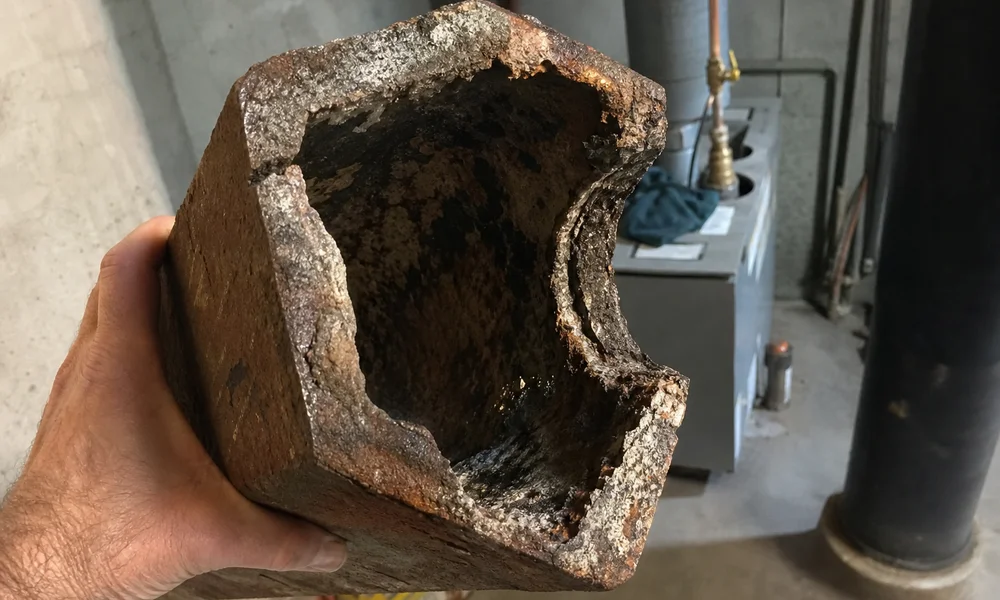
Clay tile can handle wood smoke for decades. Give it condensing acid every day for ten years and it starts to erode, spall, and crack from the inside — watch for the signs your chimney liner is damaged.
When Relining Is Explicitly Required by Code
Connecticut generally requires a properly sized flue liner in these situations:
- Installing a new gas appliance — especially a high-efficiency furnace or water heater
- Switching fuel type (oil to gas or vice versa)
- After a chimney fire or storm damage
- When an inspection finds tile cracks or missing tiles
- On any orphaned flue — an appliance venting alone into an oversized chimney originally sized for multiple appliances
Even when not strictly required, relining is often strongly recommended once existing corrosion has started.
Signs Your Gas or Oil Flue Needs Relining
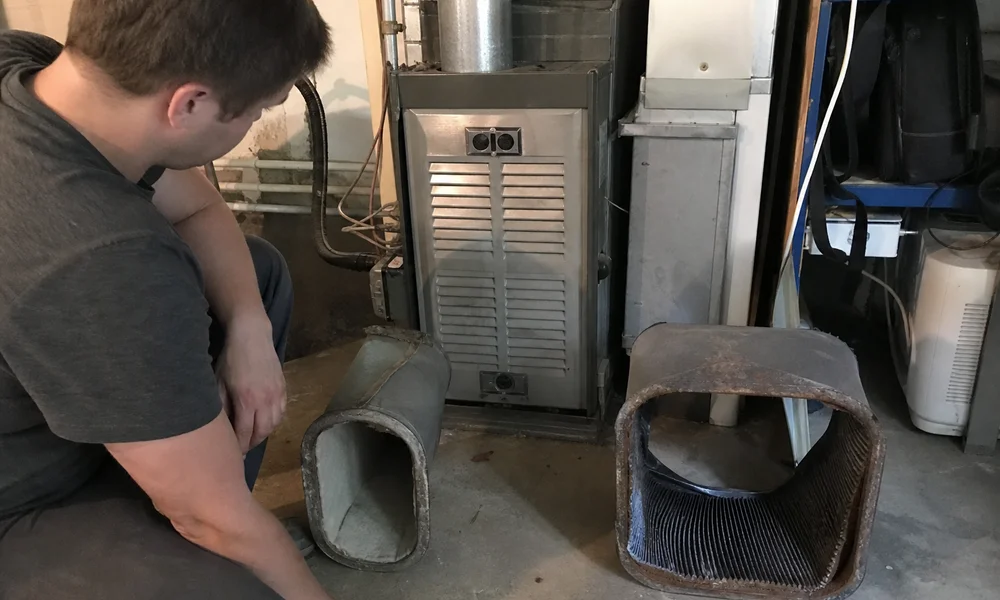
- Rust or corrosion on the flue pipe connection at the appliance
- Rust stains on the exterior chimney
- White staining (efflorescence) on the chimney
- CO detector activity that correlates with appliance operation
- A recent appliance upgrade to a higher-efficiency unit
- Any signs of moisture in the basement near the chimney base
The Right Liner Material
- Standard oil furnace or older gas: 316 Ti stainless steel or 304 stainless
- High-efficiency gas condensing: AL29-4C stainless (extra corrosion resistance)
- Wood-burning appliance: 316 Ti stainless
Sizing matters as much as material. An oversized liner condenses more (worse); an undersized liner restricts draft. We size based on the appliance BTU rating and manufacturer specs.
What Happens Without a Liner
Progressive damage over years:
- Interior tile corrosion — pitting and spalling of clay tile
- Mortar joint failure between tiles
- Complete tile fractures letting exhaust into wall voids
- CO leakage into living spaces
- Chimney structural damage from acid penetrating brick
Cost Considerations
Gas/oil appliance relining typically runs $1,500–$4,500 depending on chimney height, liner size, and material. Compare to the alternative: a corroded flue can lead to full masonry rebuild ($10,000+) or CO poisoning risk.
Financing available through Synchrony for larger relining jobs. See financing options.
When to Book
Book an inspection now if:
- You just switched appliances (oil to gas conversion)
- Your appliance is high-efficiency and vents into masonry
- You’ve never had a video scan of the flue
- You’re seeing any warning signs above
- You’re selling and want to avoid inspection issues
See our chimney relining service or contact us to schedule.
Chimney Relining & HeatShield
Stainless steel liner installation and HeatShield cerfractory repair to restore structural integrity and safe drafting in cracked or deteriorated flues.
Learn About Chimney Relining