
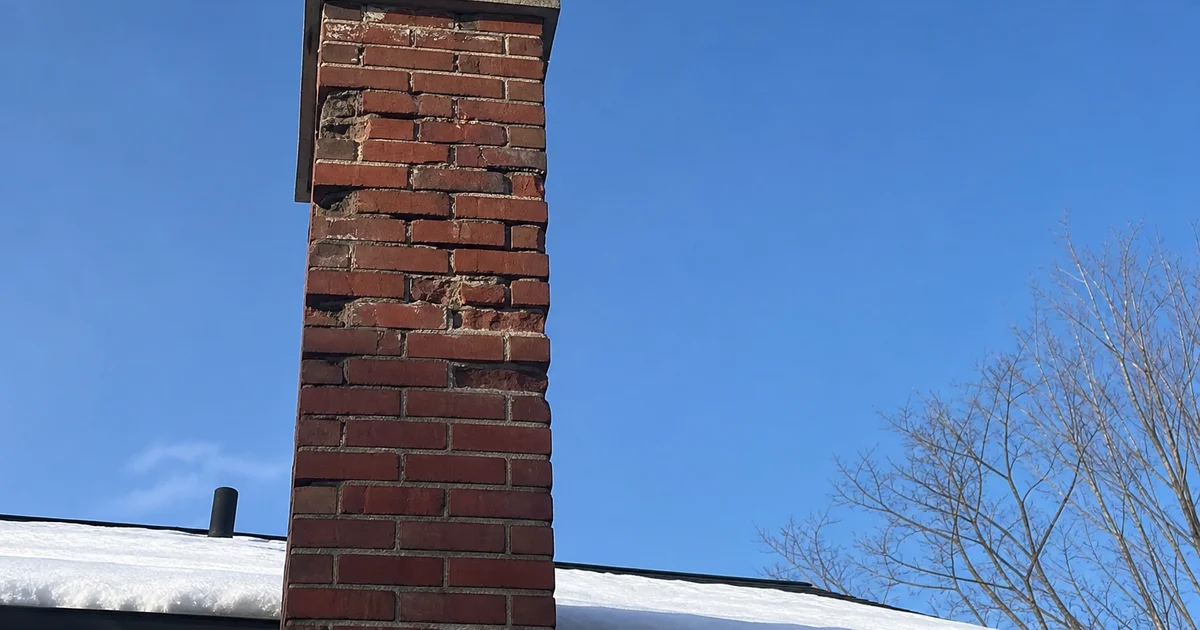
Connecticut freeze-thaw winters are the enemy of every brick chimney. Water gets into hairline cracks, freezes, expands, and breaks the masonry from the inside. The damage progresses year over year — and the earlier you catch it, the cheaper the chimney masonry repair.
Here are the seven signs to watch for, in roughly the order they typically appear.
1. Missing or Crumbling Mortar Joints
The joints between bricks are the first thing to go. Mortar is softer than brick by design, so water attacks it first. Look for gaps between bricks, mortar dust on the roof or ground below, or joints you can pick out with a fingernail.
Fix: Tuckpointing — grinding out failed mortar and packing in fresh, matched mortar.
2. Spalling Brick
Spalling is when brick faces flake, pop, or crumble off, exposing the softer inner brick. It looks like the front layer of a brick is missing. Once spalling starts, it accelerates fast — the exposed inner brick is much more porous than the fired outer face.
Fix: Individual spalled bricks get replaced; widespread spalling requires a partial or full rebuild.
3. Efflorescence (White Staining)
White or gray staining on the chimney means water is moving through the masonry and depositing dissolved salts on the outside as it evaporates. Efflorescence itself isn’t structural, but it’s a clear warning that water is penetrating.
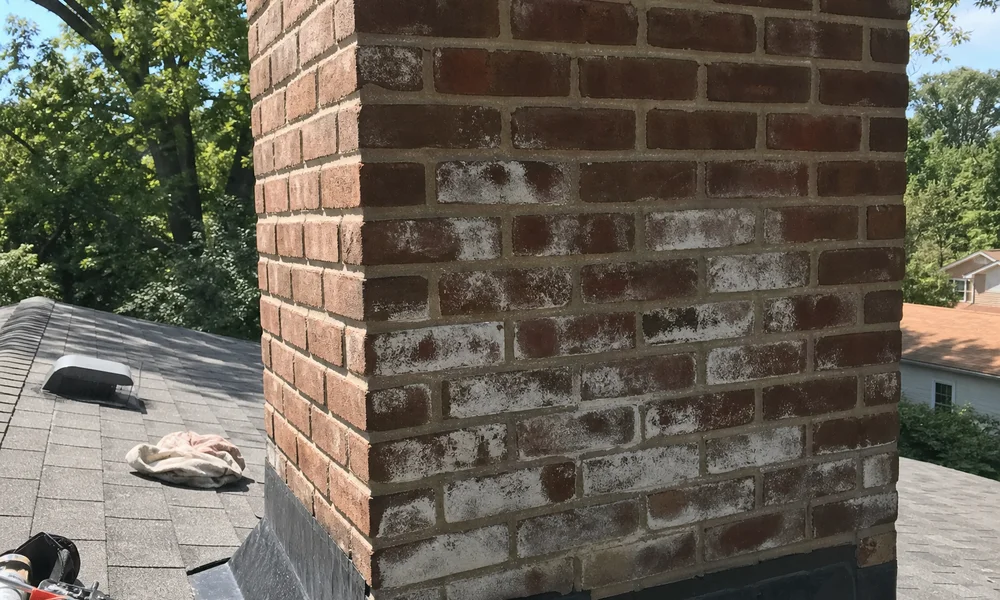
Fix: Solve the water source first (usually a bad crown, cap, or flashing), then treat with breathable Silane-Siloxane waterproofing.
4. Cracked or Deteriorated Crown
The chimney crown is the concrete slab on top. Hairline cracks let water drip straight into the masonry below. Big cracks or crumbling sections drop chunks of concrete around the base of the chimney.
Fix: Seal minor cracks with elastomeric crown sealer; replace failed crowns. See our crown repair guide.
5. A Leaning Chimney
If the chimney is visibly off plumb — even slightly — something structural is wrong. Common causes: foundation settling, mortar failure on one side, water damage concentrated on the weather-exposed face, or an inadequate footing.
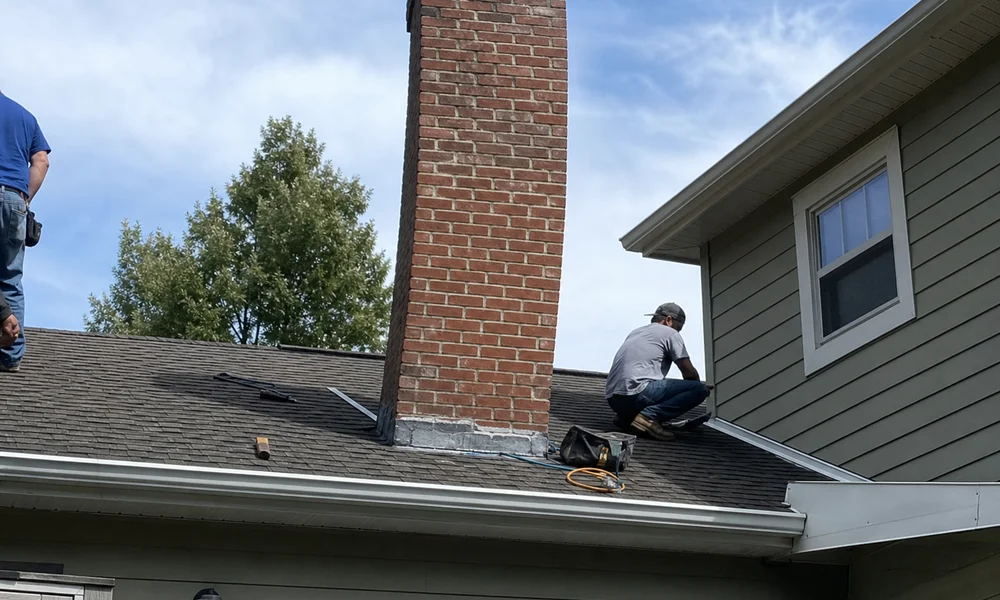
Fix: Requires a full inspection. Stable historic leans can sometimes be preserved with tuckpointing. Progressive leans require a partial or full rebuild.
6. Interior Water Stains or Damp Spots
Ceiling stains near the chimney chase, damp spots on the walls next to the chimney, or moisture inside the firebox after rain all mean water is getting past the exterior. The source is usually flashing, crown, or cap — occasionally spalling brick.
Fix: Diagnostic leak assessment first, then targeted repair. See our leaks and waterproofing service.
7. Firebox Cracks or Missing Refractory Mortar
Cracks in the firebox brick or missing mortar between firebricks are a fire safety issue — the cracks can let heat reach combustible framing behind the fireplace.
Fix: Firebox repair with matched firebrick and refractory mortar.
What Happens If You Wait
Every one of these signs gets worse — sometimes slowly, sometimes fast. A single winter can turn hairline mortar cracks into missing joints, or turn one spalled brick into a section of failed brick faces. The math is brutal:
- $500 tuckpointing today → $6,000–$12,000 partial rebuild in five years
- $300 crown sealer today → $2,000 crown replacement in three years
- $400 flashing repair today → $5,000 in interior water damage restoration
Book an Assessment
If you spotted any of these signs on your chimney, book a free (or free virtual) assessment. We’ll tell you honestly whether it’s repair-today or watch-and-see. See our chimney masonry repair service or contact us.
Chimney Masonry Repair & Rebuilding
Complete chimney masonry repair — tuckpointing, brick repair, crown work, firebox and smoke chamber rebuilding across central Connecticut.
Learn About Masonry Repair