
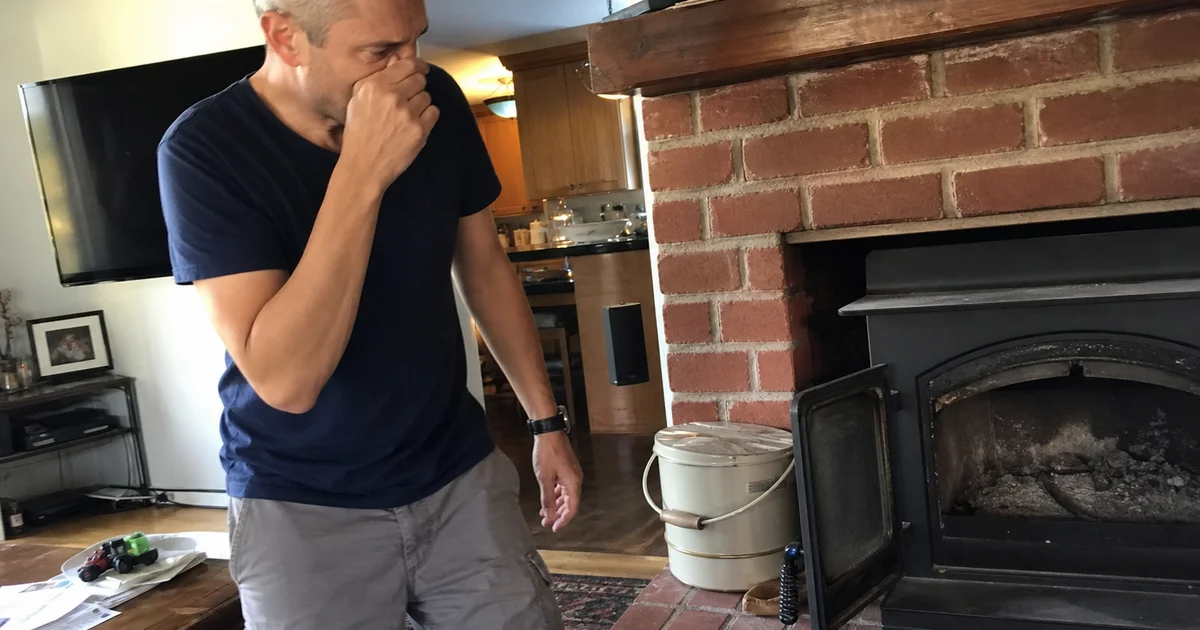
If your chimney smells like a wet campfire, dead animal, or musty basement — especially in summer — there’s a specific cause and a specific fix. Here are the four odor sources we investigate on every “chimney smells” service call.
Cause 1: Creosote Absorbing Humidity
The most common odor by far. Creosote deposits inside your flue are largely dormant in dry winter air, but summer humidity reactivates them. Moisture wakes up tar and phenolic compounds, and the air moving down through the flue carries the smell into the room.
Solution: A professional chimney sweep that removes the creosote. Usually solves the problem completely — these odors are among the signs your chimney needs cleaning.
Cause 2: Water Getting In
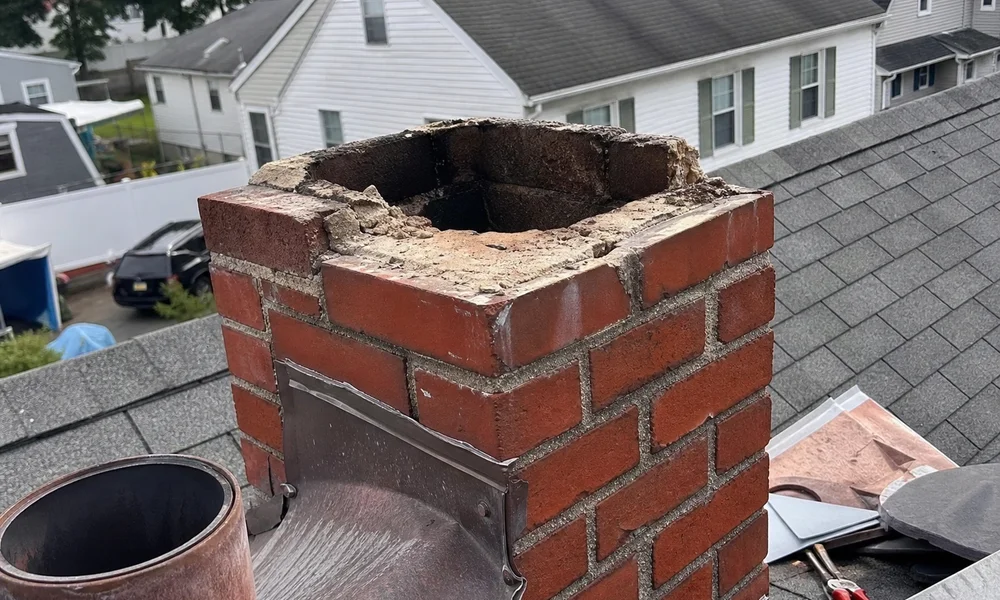
Rain entering the chimney through a failed crown, cracked cap, or missing cap wets the interior brick and creosote. Wet masonry smells like a damp basement; wet creosote smells like a wet ashtray.
Solution:
- Install or replace the chimney cap
- Repair or replace a failed crown
- Fix any flashing that’s letting rain into the chimney structure
- Apply Silane-Siloxane waterproofing to porous brick
Cause 3: Negative Air Pressure Pulling Flue Air Into the House
Modern homes are tight. Kitchen exhaust hoods, bathroom fans, and central AC all pull air out of the house. That negative pressure has to be replaced somewhere, and the easiest place is often — the chimney flue, in reverse. Instead of flue air going up, house air pulls flue air down.
Even if the chimney itself doesn’t stink, dragging flue air into your living space smells like an unused fireplace should never smell.
Solutions:
- Close the damper tight when not in use
- Install a top-sealing damper (seals at the top of the chimney)
- Check that combustion appliances have adequate make-up air
- Reduce whole-house negative pressure sources
Cause 4: Animal Intrusion
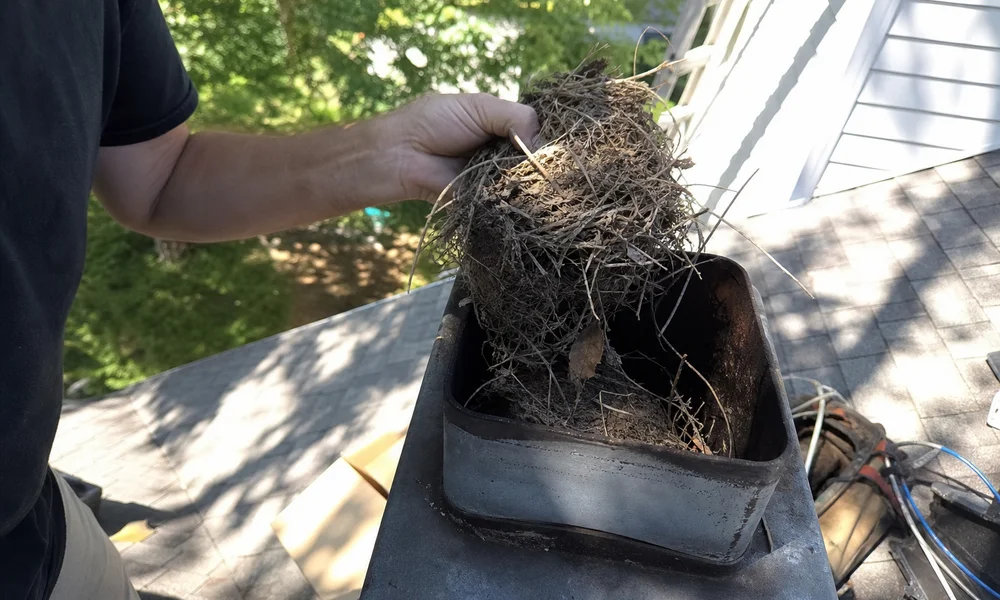
Birds, squirrels, and even raccoons will nest in an unmet flue. Their nests, droppings, and (unfortunately) sometimes deceased animals produce a distinctive rotting-organic smell that’s obviously different from creosote or moisture.
Solutions:
- Professional removal of nest material and any deceased animals
- Full sweep after removal
- Install a mesh-screened chimney cap to prevent recurrence
Combined Approach for Persistent Odor
Sometimes multiple causes stack up. Our typical odor-diagnostic sweep visit includes:
- Level 1 visual inspection to check for animal intrusion and physical blockages
- Full flue sweep to remove creosote
- Cap and crown check (and quote if either needs work)
- Assessment of negative-pressure issues if odor persists after sweep
When Odor Means Something Serious
Rarely, chimney odor indicates a more serious problem — a partial flue blockage causing incomplete combustion (CO risk) or a cracked flue letting combustion gases into wall spaces. If you have any CO detector activity along with chimney odor, treat it as an emergency and see our carbon monoxide safety guide.
Book a Diagnostic Sweep
Ready to eliminate the smell? See our chimney sweeping service or contact us to schedule.
Chimney Sweeping & Cleaning
Routine chimney sweeping, creosote removal, and furnace flue cleaning to prevent chimney fires. HEPA vacuums and drop cloths on every job.
Learn About Chimney Sweeping