
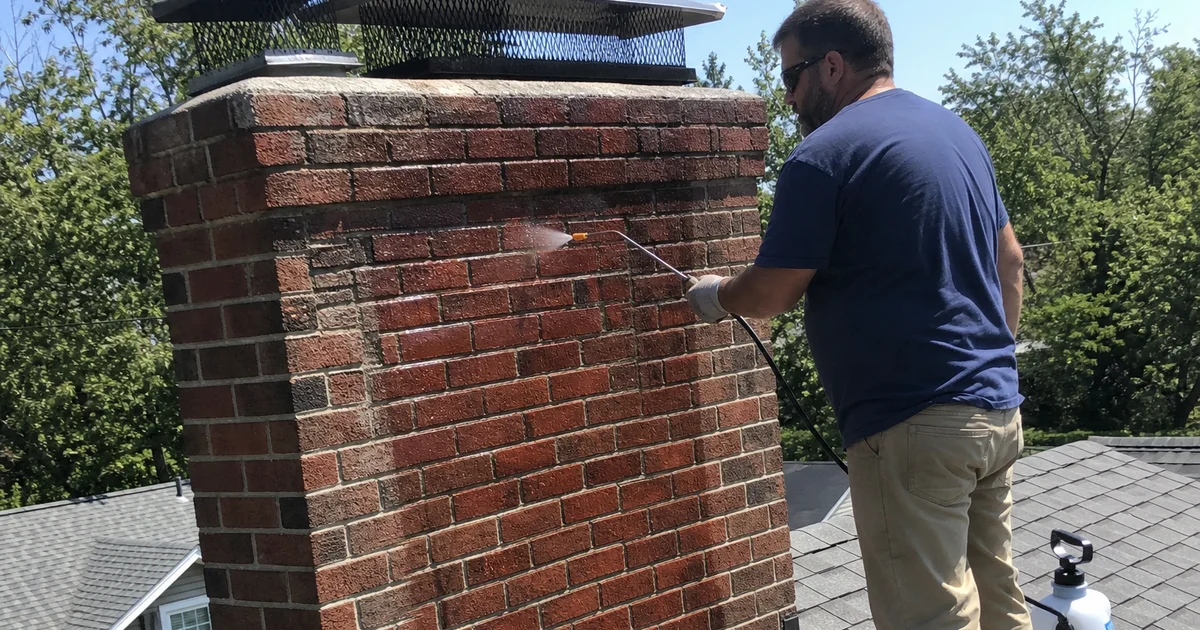
Chimney waterproofing is the preventive side of our chimney leak repair and waterproofing work — a step most homeowners don’t think about until damage has already started. For a $500–$1,500 investment every decade, waterproofing prevents thousands of dollars of freeze-thaw damage. It also pairs naturally with fixing the common causes of a leaking chimney. Here’s the honest math.
What Waterproofing Actually Does
Brick and mortar are naturally absorbent. In central Connecticut winters, water absorbed into masonry freezes at night, expands by ~9%, and cracks the material over dozens of freeze-thaw cycles per season. Over years, this creates:
- Spalling brick faces
- Failed mortar joints
- Efflorescence (white staining)
- Cracked crown
- Interior water intrusion
Waterproofing stops water from being absorbed in the first place, which stops freeze-thaw damage from happening at all. See our freeze-thaw damage guide for the mechanics.
The Right Product: Breathable, Not Sealed
This is where most DIY waterproofing goes wrong. Two categories:
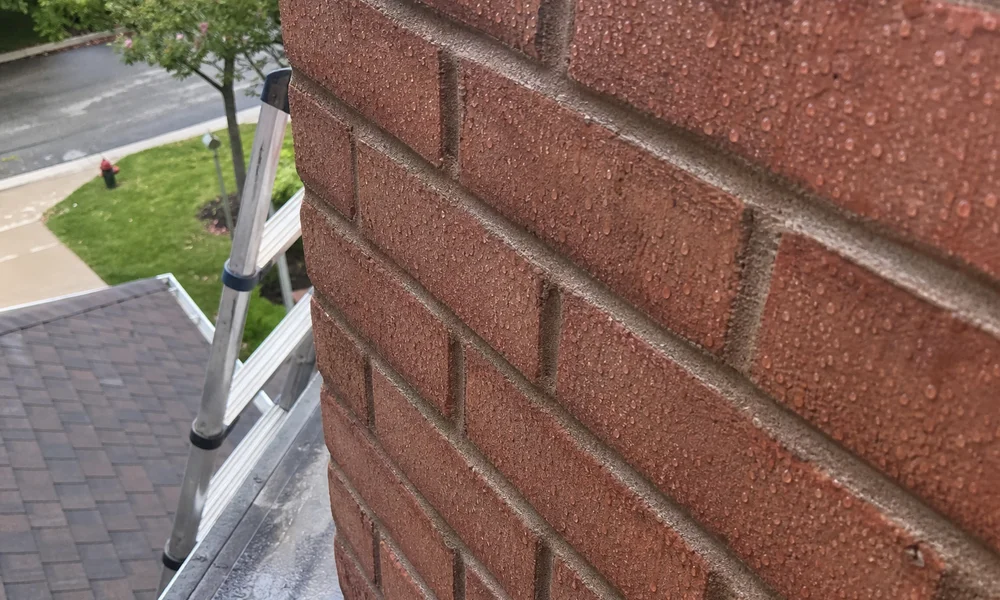
Breathable water repellent (correct) — Silane-Siloxane based products form a bond with the masonry that blocks liquid water absorption but lets water vapor pass through. Rain beads on the surface; vapor still escapes.
Non-breathable sealant (wrong) — Acrylic clear coats and silicone sealers trap moisture inside the brick. Water still gets in through unsealed cracks, then can’t escape as vapor. Freeze-thaw damage accelerates. Brick faces blow off.
We only use Silane-Siloxane repellents. Never acrylic clear coats or silicone sealants.
The Cost Math
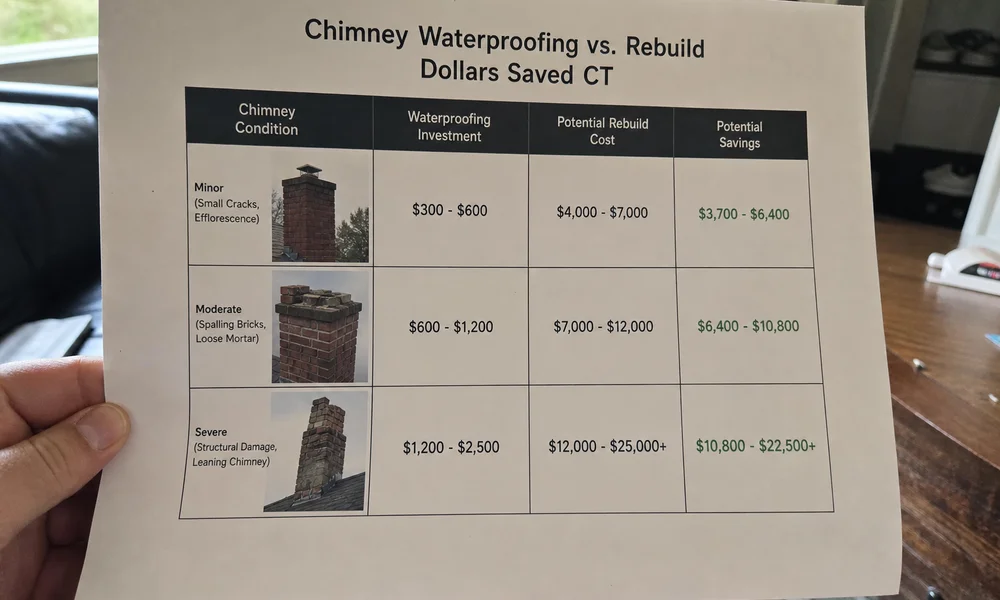
Waterproofing cost: $500–$1,500 every 7–10 years, depending on chimney size and access.
Alternative (unwaterproofed chimney) over 20 years:
- Tuckpointing every 10–15 years: $1,500 per event
- Crown repair: $600 event
- Individual brick replacement: $500–$2,000
- Eventual partial rebuild once accumulated damage forces it: $8,000–$15,000
Over a 20-year horizon: Waterproofing typically saves $3,000–$10,000 in reactive repair costs.
When Waterproofing Doesn’t Fit
- Chimney is already extensively damaged (needs repair or rebuild first)
- Existing sealant on the chimney (would need removal first)
- Painted chimneys (paint blocks the repellent from bonding)
The Right Timing
Best time to waterproof:
- New chimney construction — apply before first winter
- After any masonry repair — protect fresh mortar
- After a full rebuild — protect the whole new structure
- On any older sound chimney that has never been treated
Not the right time:
- Chimney is already leaking (fix the source first)
- Cold or wet weather (product needs dry masonry and moderate temperatures to cure)
Warranties
Quality Silane-Siloxane repellent applications from us come with a written 10-year warranty on water repellency. If the product fails within the warranty period, we re-apply at no cost.
Book a Waterproofing Assessment
Ready to protect your chimney? See our chimney leaks and waterproofing service or contact us.
Chimney Leaks & Waterproofing
Flashing repair, crown sealing, and breathable waterproofing to stop chimney leaks before they rot framing and stain ceilings.
Learn About Leaks & Waterproofing