
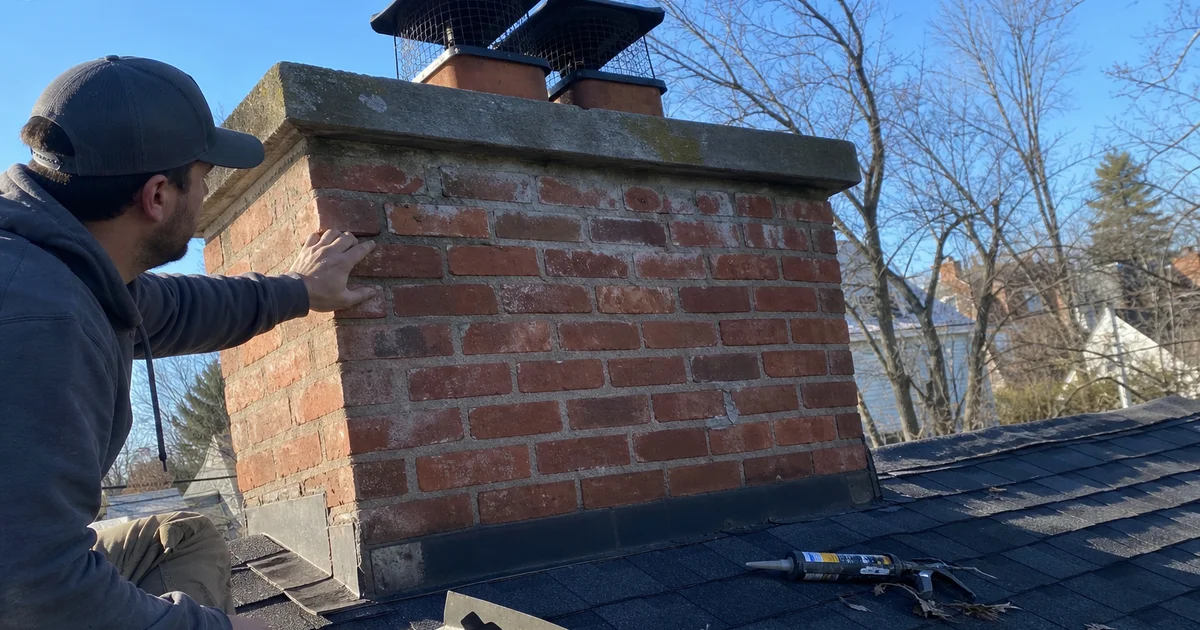
Chimney leaks all look the same to the homeowner — water where it shouldn’t be. To the technician, they trace back to one of five sources, each addressed by our chimney leak repair and waterproofing work. Here’s each, in rough order of frequency.
1. Failed Flashing at the Roofline (~60%)
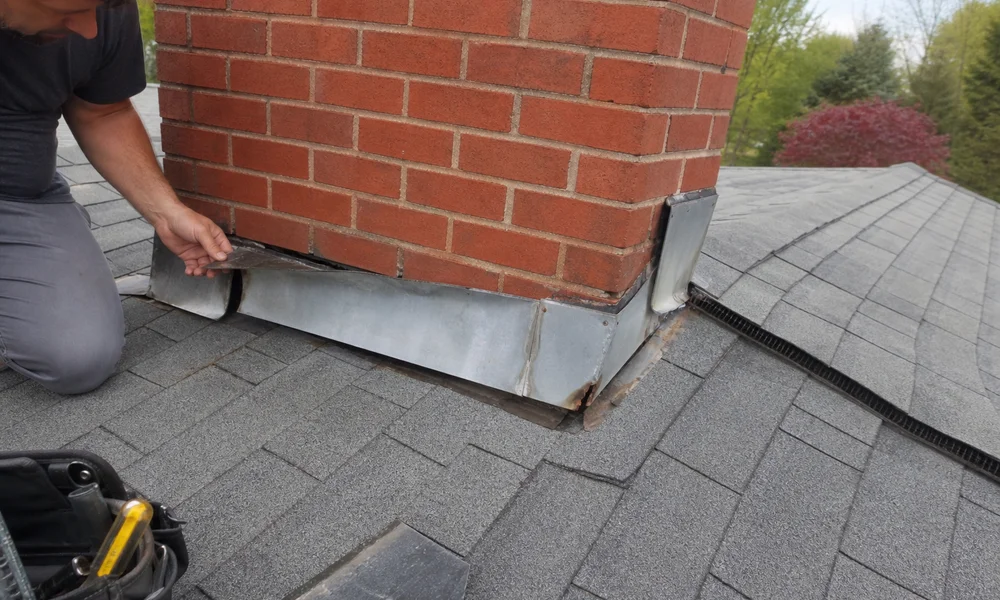
The metal that seals the joint where the chimney passes through the roof. Two-layer system: step flashing woven under each row of shingles, and counter-flashing embedded into the chimney mortar joints.
How it fails:
- Aluminum step flashing lifts or corrodes
- Tar-based sealants dry out and crack
- Counter-flashing pulls out of the mortar joint
- Poorly installed flashing that never sealed properly
Fix: Replace failed sections with new step and counter-flashing. Copper or lead flashing lasts longest; aluminum with proper sealant is standard.
2. Cracked or Failed Chimney Crown (~20%)
The concrete slab on top. Cracks let water directly into the masonry below.
Fix: Seal minor cracks with elastomeric crown sealer. Replace failed crowns with proper concrete, overhang, and drip edge. See crown repair guide.
3. Missing, Damaged, or Undersized Chimney Cap (~10%)
Without a cap, rain falls straight down the flue. Old or rusted caps do the same.
Fix: Install a properly sized stainless steel chimney cap with rain shield and mesh screening.
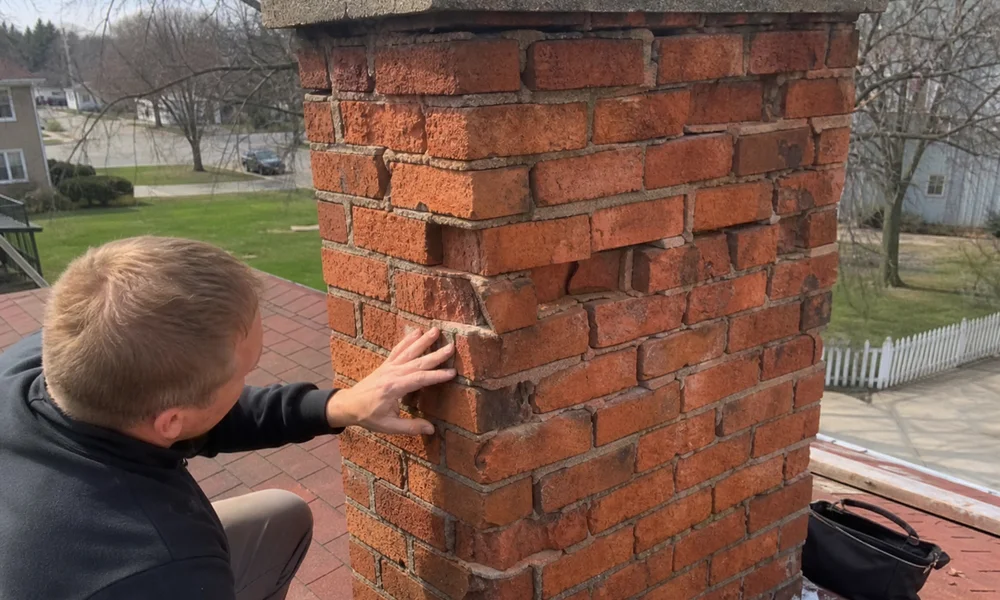
4. Porous or Spalling Brick (~5%)
Older or damaged brick faces absorb water. Once absorbed, water wicks through the masonry over time — especially bad after freeze-thaw cycles.
Fix: Repair spalling bricks first, then apply breathable Silane-Siloxane waterproofing to the entire chimney exterior. See waterproofing guide.
5. Condensation from Inside (~5%)
Uncommon but real. In some situations — especially with high-efficiency gas appliances venting into a masonry chimney without a liner — condensation from combustion gases can drip inside the flue and appear like a leak.
Fix: Install a properly sized stainless steel chimney liner to isolate combustion gases from cold masonry walls.
The Diagnostic Sequence We Follow
- Interior examination (where the water is showing)
- Attic check for water tracks on the chimney chase
- Roof inspection of all four sources
- Controlled water test if source isn’t obvious
- Written diagnosis with quote for each finding
Why Fixing Fast Matters
- One winter of freeze-thaw on already-wet masonry = major spalling damage
- Water in framing = rot, mold, structural repairs
- Water in wall cavity = drywall damage, mold remediation
- Cost to fix a leak today: $400–$2,500
- Cost to fix the resulting damage in five years: $5,000–$25,000+
Book a Leak Diagnostic
Seeing water anywhere it doesn’t belong? Book an assessment now. See our chimney leaks and waterproofing service or contact us.
Chimney Leaks & Waterproofing
Flashing repair, crown sealing, and breathable waterproofing to stop chimney leaks before they rot framing and stain ceilings.
Learn About Leaks & Waterproofing