
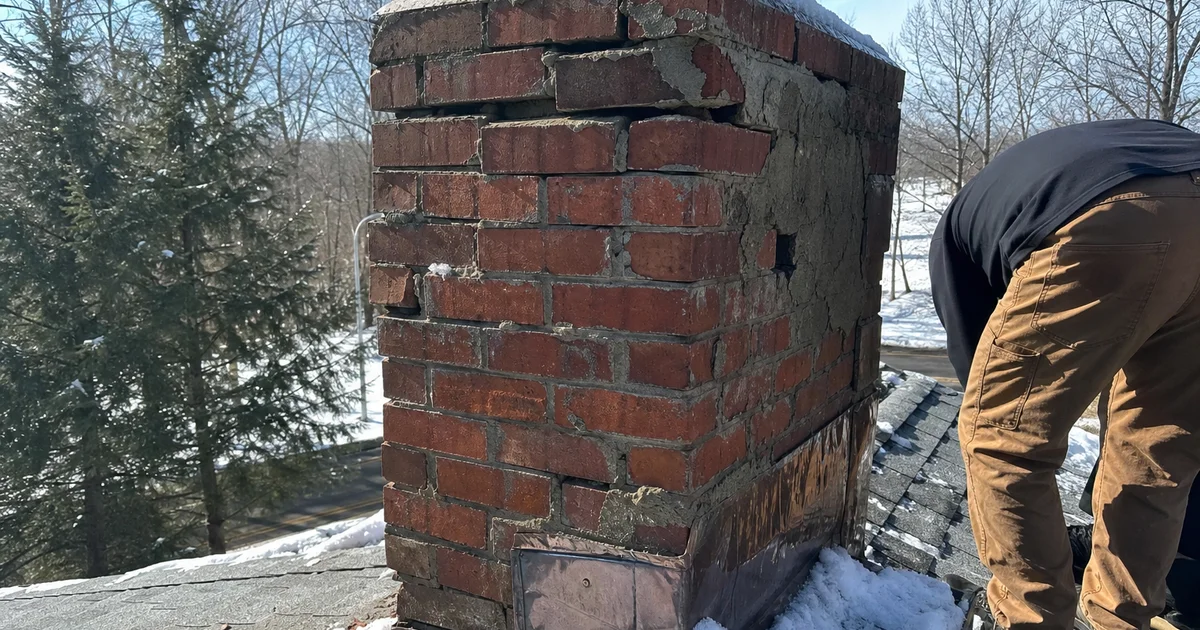
If you own a brick chimney in central Connecticut, freeze-thaw damage is the reason it eventually needs chimney masonry repair. Understanding the mechanics helps you catch problems early and know why prevention (waterproofing, timely joint repair) beats reactive repair every time.
The Science in Two Sentences
Water expands by about 9% when it freezes. When that water is inside a hairline crack in your chimney’s brick or mortar, that expansion cracks the surrounding masonry — a little more each freeze cycle.
Connecticut’s Winter Is Uniquely Brutal
Not all cold climates are equally hard on masonry. Two things make CT winters especially destructive:
- Frequent freeze-thaw cycling. Central Connecticut typically sees 50–80 freeze-thaw cycles per winter — days that go above 32°F then back below. Colder climates like northern Vermont often have fewer cycles (stays frozen longer). Warmer climates skip freeze entirely. Our range is the sweet spot for masonry damage.
- Wet weather with cold snaps. Nor’easters and mixed precipitation soak masonry, then temperatures drop overnight, trapping water inside just before it freezes.
The Damage Sequence
- Hairline crack appears in mortar or brick (weather, age, or original construction)
- Water absorbs into the crack during rain, humidity, or snow melt
- Temperature drops below 32°F overnight
- Water freezes and expands, widening the crack
- Thaws again the next day, letting more water in
- Cycle repeats — cracks widen, spread, and eventually cause visible spalling or joint failure
Signs of Freeze-Thaw Damage
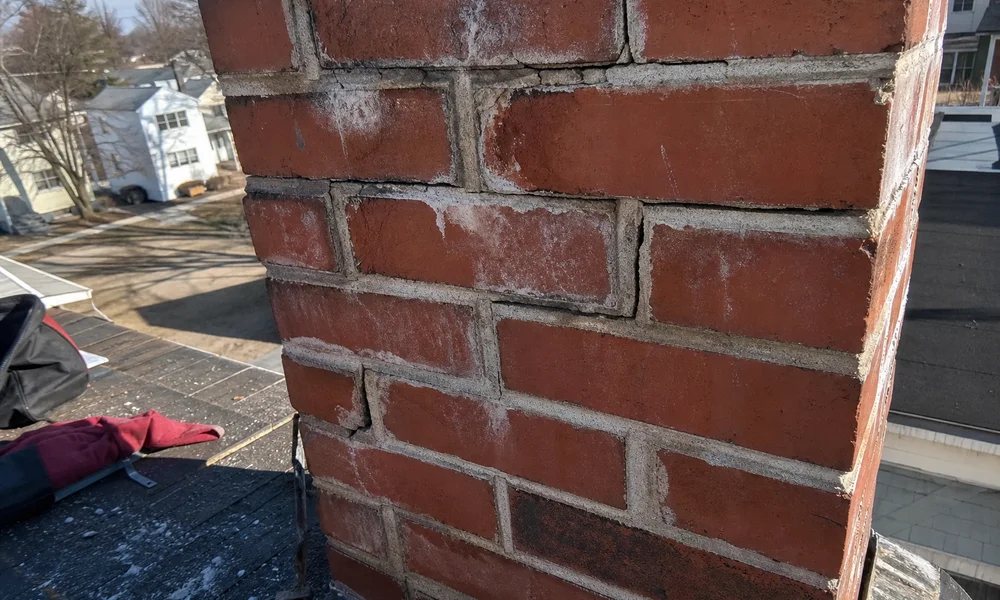
- Spalling brick — brick faces flaking or popping off
- Crumbling mortar joints — sand and mortar dust on the ground below
- Efflorescence — white staining showing water moving through the masonry
- Cracked crown — hairline cracks that widen every winter
- Interior leaks appearing after severe winters
See our full masonry damage signs guide for details.
Prevention
Freeze-thaw damage requires water to happen. Stop water intrusion and you stop the damage. Two strategies:
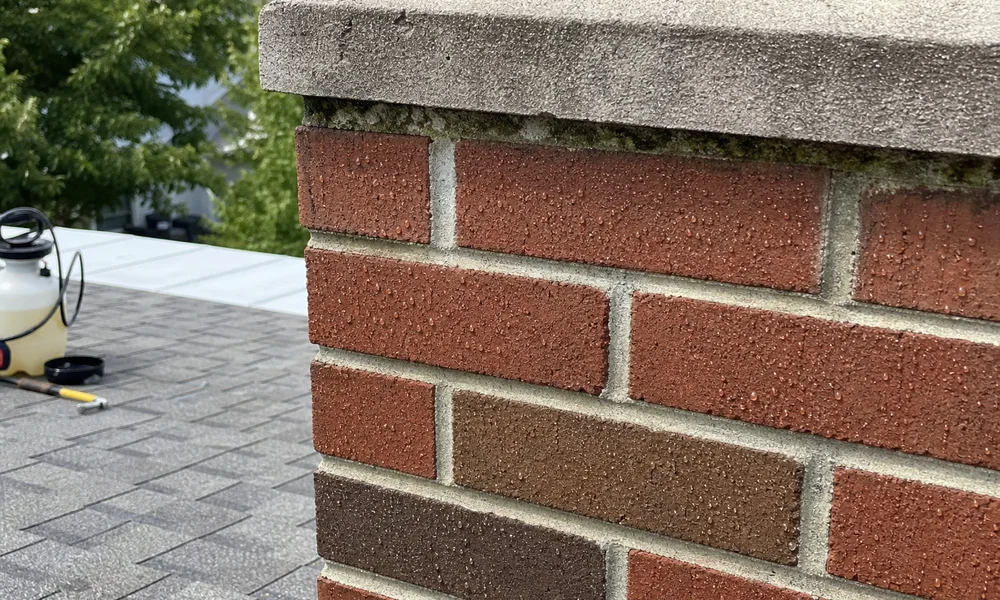
Breathable waterproofing. Silane-Siloxane repellents applied to the exterior brick prevent water from absorbing into the masonry, while letting vapor escape. This is a straightforward, cost-effective preventive treatment we recommend for most Connecticut chimneys every 7–10 years.
Timely joint repair. Small mortar cracks now are $500 tuckpointing. The same cracks after three winters of freeze-thaw are $6,000 partial rebuilds. Don’t wait.
Why “Breathable” Waterproofing Matters
Not all sealers are safe for brick. Non-breathable acrylics or silicone sealers trap moisture inside the brick — the exact opposite of what you want in a freeze-thaw climate. Trapped water still freezes, still expands, and now has nowhere to escape as vapor. Brick faces blow off.
We only use Silane-Siloxane-based repellents that block liquid water absorption but let vapor pass through. See our waterproofing service and is waterproofing worth it guide.
Book a Preventive Assessment
If your chimney hasn’t been waterproofed in the last decade, or if you’re seeing early signs of masonry damage, book a free assessment. See our masonry repair service or contact us.
Chimney Masonry Repair & Rebuilding
Complete chimney masonry repair — tuckpointing, brick repair, crown work, firebox and smoke chamber rebuilding across central Connecticut.
Learn About Masonry Repair