
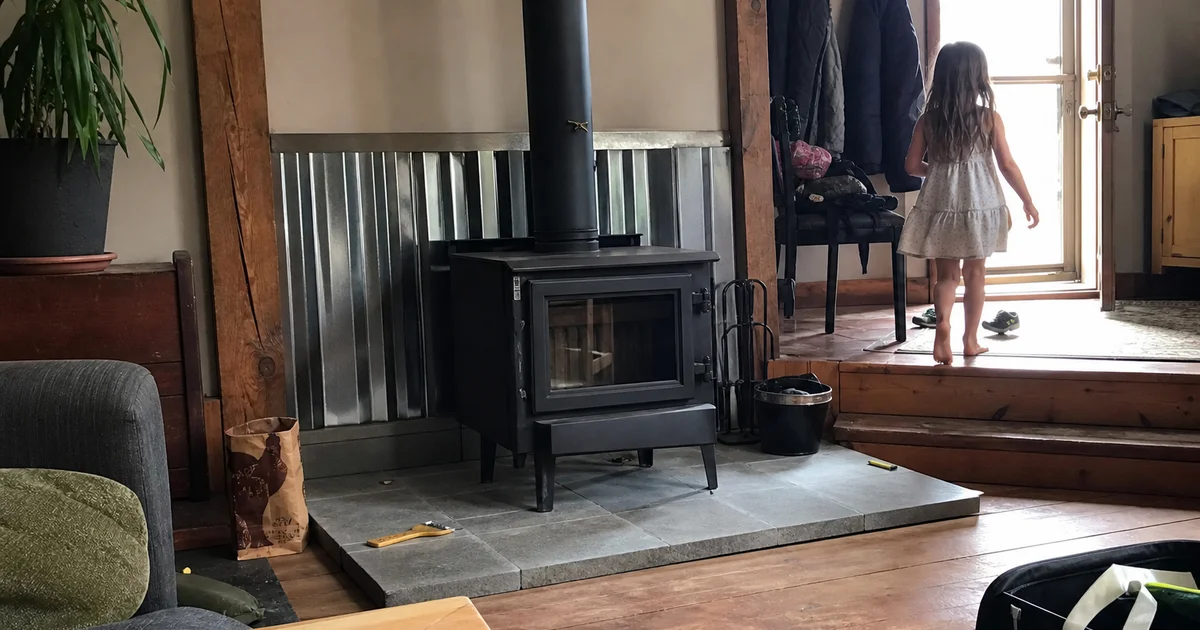
Wood stove installation costs vary widely because there’s no such thing as a “standard” fireplace and stove installation. Chimney or wall vent, hearth work, clearances, appliance choice — each affects the number. Here’s the honest 2026 breakdown for central Connecticut.
Typical Total Installed Cost
Basic wood stove installation: $3,500–$5,000
Includes an entry-level EPA-certified stove, stainless steel liner (if using an existing masonry chimney), simple hearth pad, permit, and labor. Fits most single-story CT homes. If you’re still choosing a fuel, compare pellet vs wood vs gas fireplaces first.
Mid-range install: $5,000–$7,500
Better-quality mid-tier stove (Jotul, Hearthstone, Regency), full insulated stainless liner, custom hearth pad, complex venting or extended stove pipe.
High-end install: $7,500–$12,000+
Premium stove ($4,000+ appliance), Class A insulated chimney system for through-wall or through-roof installation with no existing chimney, custom stone hearth, historic-home considerations.
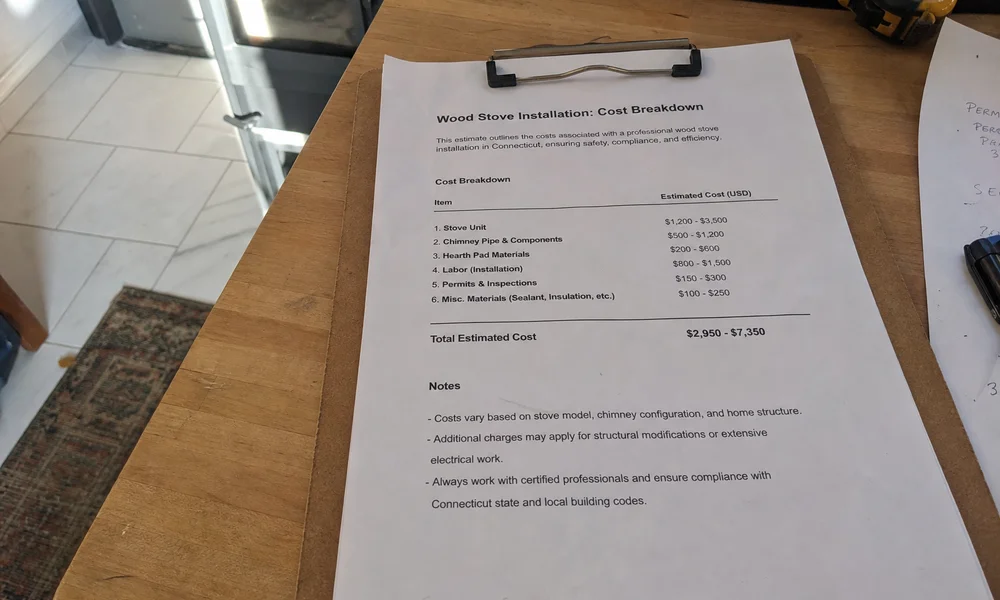
Cost Breakdown by Component
The stove itself: $1,200–$5,000+
- Entry-level EPA-certified: $1,200–$2,000 (basic steel stove)
- Mid-range: $2,000–$3,500 (better fit, longer burn times, glass door)
- Premium: $3,500–$5,000+ (soapstone, cast iron, catalytic)
Chimney/venting: $800–$3,500
Using existing masonry chimney with new stainless steel liner: $800–$1,800
Installing new Class A insulated chimney (no existing chimney): $2,000–$3,500 through-wall or through-roof
Hearth pad: $200–$1,500
- Basic prefab pad: $200–$400
- Custom tile or stone pad: $500–$1,500
Permit: $75–$250 (varies by town)
Labor: $800–$2,000 depending on complexity and site conditions
What Drives Cost Up
- No existing chimney — Class A chimney installation is much more expensive than lining an existing masonry flue
- Long or complex vent runs — extra sections of pipe, offsets, or through-wall penetrations
- Historic home considerations — matching hearth to period, careful masonry work
- Steep roof or difficult access — additional scaffolding, safety equipment
- Multiple floor penetrations — venting through two levels of framing costs more than one
- Premium hearth materials — custom stone or tile work
What Drives Cost Down
- Existing sound masonry chimney — just needs a stainless liner
- Ground-floor installation — simpler venting path
- Simple prefab hearth pad — much cheaper than custom tile work
- Off-season scheduling — spring installations sometimes get better pricing
What’s Included in Our Quotes
- Appliance
- All venting components (Class A chimney or stainless liner)
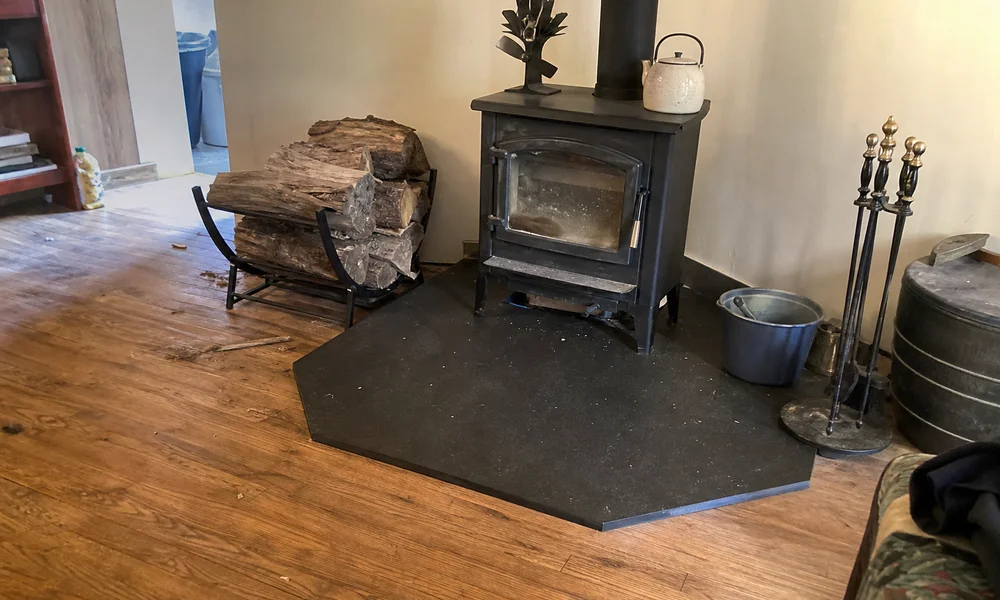
- Hearth pad sized to the stove and code
- Permit application and inspection coordination
- Full installation labor
- Owner walkthrough and first-burn instruction
- Written warranty on our installation work
What’s Not Included
- Existing chimney repair (if the chimney needs work first, that’s a separate scope)
- Wall or roof cosmetic work beyond what installation requires
- Firewood
Financing Options
Wood stove installations frequently qualify for Synchrony financing with deferred-interest or reduced-APR promotions. We include financing information with every quote if requested.
When to Book
The best time to install a new wood stove in Connecticut is late spring through early fall. Reasons:
- Cooler weather makes work more efficient
- You’re not tearing up your primary heat during cold weather
- Time to burn a break-in fire and adjust before real winter
- Off-peak scheduling availability
Get Your Quote
Ready for real numbers on your specific project? See our fireplace and stove installation service or contact us for a free estimate.
Fireplace & Stove Installation
Supply and installation of fireplace inserts, wood and pellet stoves, and gas fireplaces with proper venting and Synchrony financing.
Learn About Fireplace & Stoves