
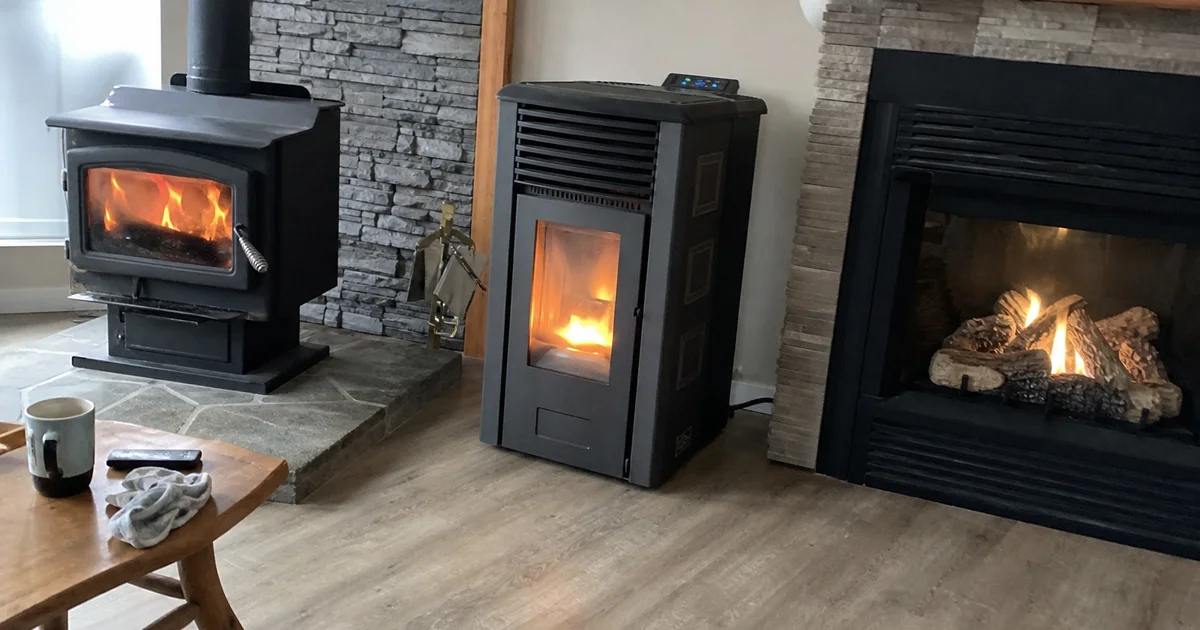
Choosing between a wood stove, pellet stove, or gas fireplace comes down to five factors: heat output, fuel cost, convenience, ambiance, and power dependency. Once you decide, our fireplace and stove installation team handles the venting and hearth work. Here’s a straight comparison based on what actually matters over years of ownership.
Heat Output
Wood stoves: Highest peak output. A modern EPA-certified wood stove can easily heat 1,500–2,500+ sq ft on a hot burn. Best for whole-house or large-open-space heating.
Pellet stoves: Steady, thermostatically controlled heat. Great for maintaining set temperatures in 1,200–2,000 sq ft.
Gas fireplaces: Instant heat with fine control. Direct-vent models heat 800–1,500 sq ft; larger multi-side models heat more. Good for zone heating specific rooms.
Fuel Cost (Central CT, 2026 baseline)
Wood: $250–$400/cord for seasoned hardwood. A cord burns 4–8 weeks depending on use. Cheapest option if you have wood storage and don’t mind hauling.
Pellets: $6–$9 per 40lb bag. A ton burns roughly a heating season. Cost falls between wood and gas.
Natural gas: Highly variable — depends on utility rates. Generally competitive with pellets when factoring in convenience.
Propane: More expensive than natural gas, works everywhere.
Convenience & Maintenance
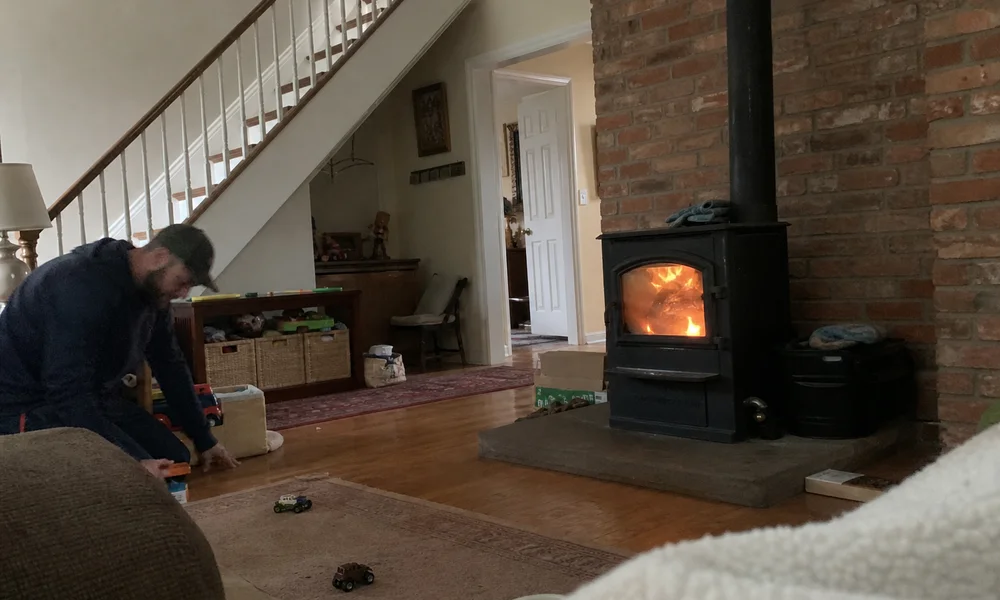
Wood stoves:
- Split, dry, stack, and carry wood
- Kindling, matches, hands-on lighting
- Ash cleanup every 1–3 fires
- Annual chimney sweep required
- No electricity needed
Pellet stoves:
- Buy and store pellet bags (cleaner than firewood)
- Hopper fill every 1–3 days
- Ash cleanup weekly
- Motor maintenance annually
- Requires electricity to run
Gas fireplaces:
- Push a button
- No fuel handling
- Annual inspection
- Occasional glass cleaning
- Requires gas connection
Ambiance
Wood: Real flames, real crackle, real smell. No substitute.
Pellet: Real flame from actual burning pellets. Ambiance is good but not identical to wood — smaller flame profile, no wood smoke smell.
Gas: Modern gas fireplaces produce impressive flame patterns, but experienced eyes can tell. Direct-vent gas has visible flame; ventless models generally banned in CT.
Power Outage Behavior
Wood: Fully functional. No electricity needed. Great backup heat during CT nor’easters.
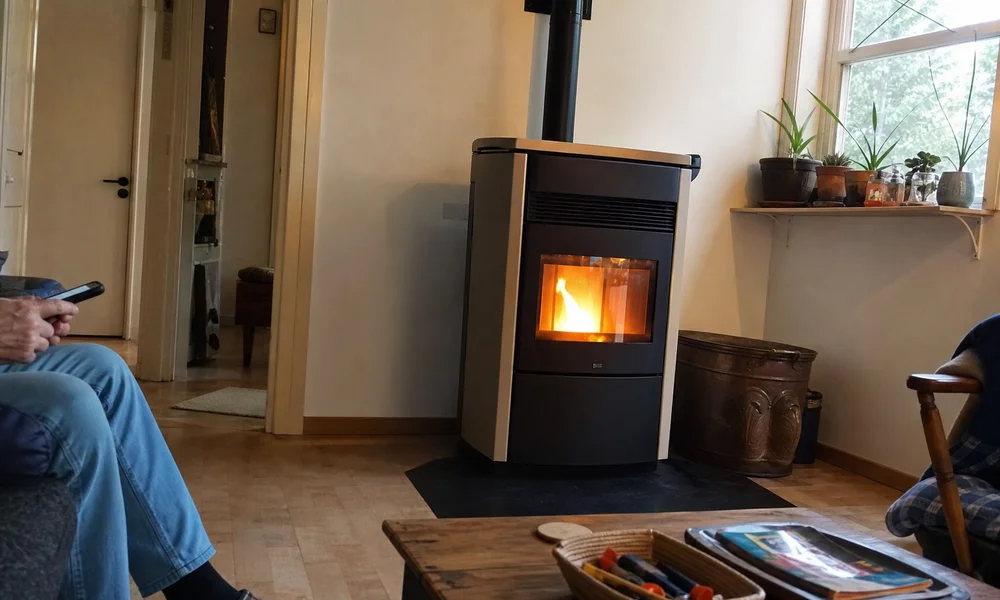
Pellet: Requires electricity for the auger and blower. Some models offer battery backup for short outages. Not reliable during multi-day outages.
Gas: Direct-vent gas with a millivolt system works without power. Newer electric-ignition systems require power unless battery backup is installed.
Installation Cost
- Wood stove: $3,000–$6,000 installed (stove + venting + hearth)
- Pellet stove: $3,500–$6,500 installed
- Gas fireplace/insert: $4,000–$8,000 installed (varies by gas hookup complexity)
See our wood stove cost guide for detailed CT pricing.
Which Is Right for You?
Choose wood if: You have wood storage, don’t mind physical work, value traditional ambiance, want backup heat during outages, and prefer lowest ongoing fuel cost.
Choose pellets if: You want a “smart” heating option with real flame, are okay buying pellets, and won’t suffer during multi-day power outages.
Choose gas if: You want push-button convenience, minimal maintenance, and clean operation, and you have gas service to the house.
Book a Consultation
We help homeowners compare in person. See our fireplace and stove installation service or contact us for a free consultation.
Fireplace & Stove Installation
Supply and installation of fireplace inserts, wood and pellet stoves, and gas fireplaces with proper venting and Synchrony financing.
Learn About Fireplace & Stoves