
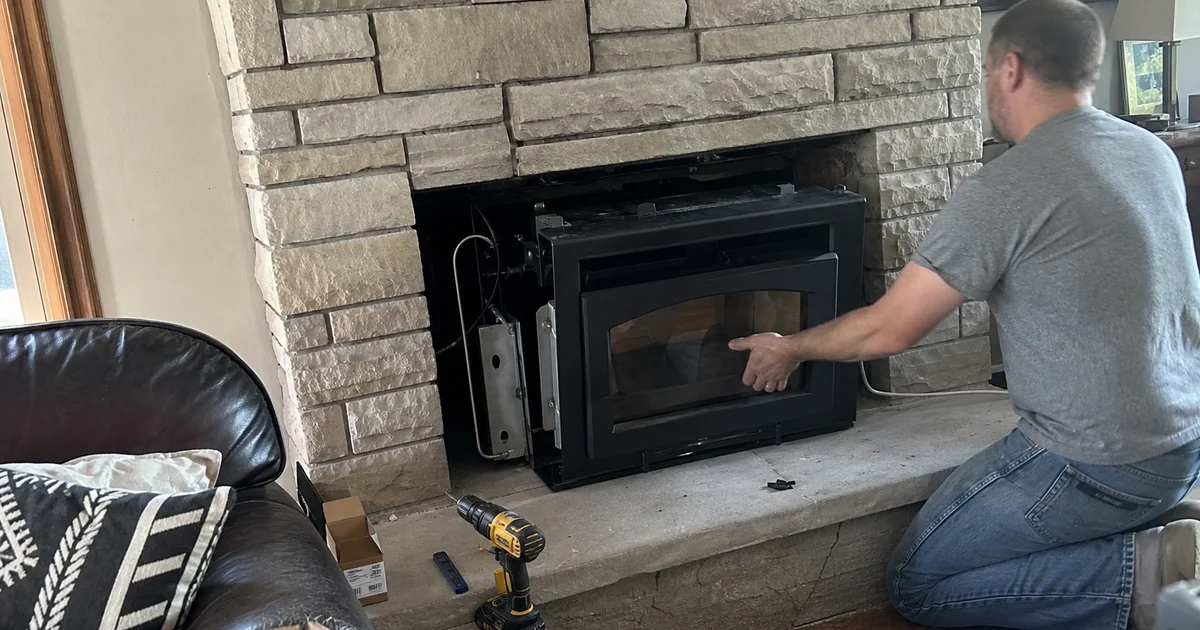
A fireplace insert transforms a heat-losing open fireplace into a genuine secondary heat source. But planning matters, which is why our fireplace and stove installation team walks through it with you. Here’s what to think through before you buy or schedule installation.
What an Insert Actually Is
A fireplace insert is a self-contained stove-like unit that slides into your existing masonry fireplace opening. It has its own combustion chamber, glass door, blower fan (usually), and vents through a stainless steel liner installed up your existing chimney flue.
Compared to an open fireplace:
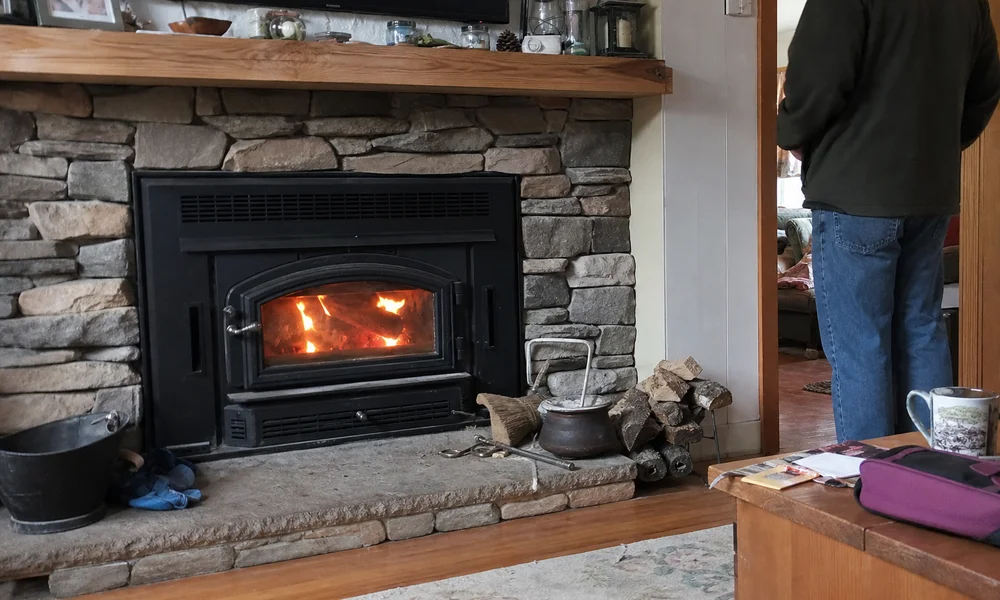
- 10x more heat output — inserts capture and radiate heat instead of losing 70%+ up the chimney
- Longer burn times — controlled combustion instead of open-fire flare-up
- Cleaner burning — EPA-certified units produce far less smoke and creosote
- Safer — enclosed firebox with glass door
- Better for cold snaps — actually heats the room and adjacent spaces
Fuel Types
Wood-burning inserts. Traditional experience, ambiance, and off-grid operation during power outages. Requires wood storage, kindling, and hands-on management. Best for homes with existing wood-heat culture. (Weighing fuels? Compare pellet vs wood vs gas fireplaces.)
Pellet inserts. Fed by compressed wood pellets from a hopper. Set-and-forget operation with thermostat control. Requires electricity. Best for convenience-oriented homeowners who still want wood-fuel economics.
Gas inserts. Direct-vent or B-vent. Push-button convenience, thermostatic control, no ash cleanup. Best for homes wanting ambiance and easy heating without wood handling.
Chimney and Liner Requirements
Every insert install includes:
- Stainless steel liner sized to the insert’s specifications, running from the insert to the top of the chimney
- Insulation wrap around the liner for proper draft and efficiency
- Termination cap at the top of the chimney
- Block-off plate at the smoke shelf to isolate the insert’s vent path
An existing chimney that’s never been swept or has damaged liner will need service or repair before an insert can be safely installed.
Sizing the Insert
Too-large inserts run at partial capacity and produce excess creosote. Too-small inserts can’t heat the room. Sizing based on:
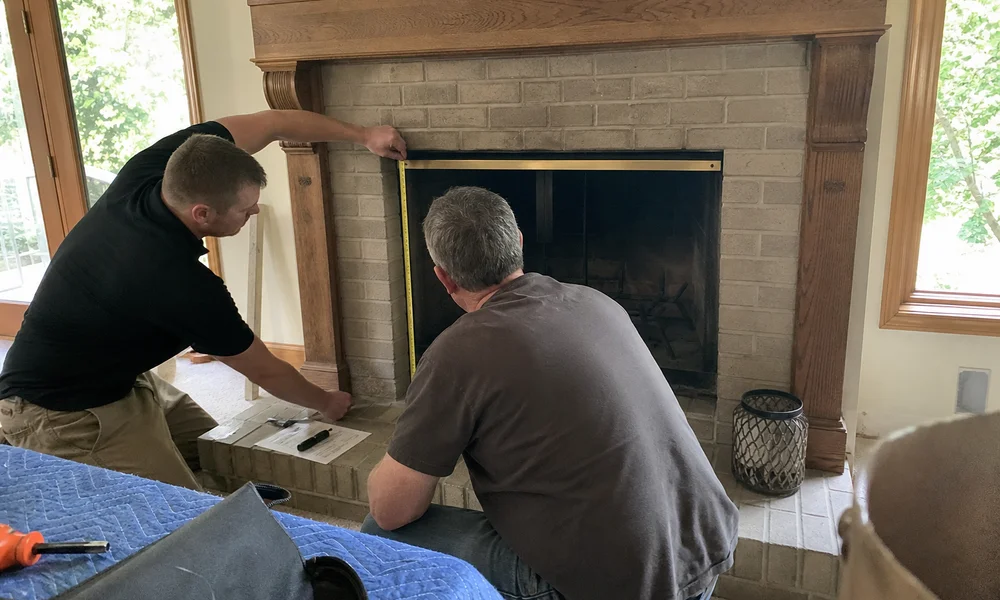
- Firebox opening dimensions
- Room square footage
- Home insulation and layout
- Backup heat availability
We measure and recommend during the free estimate visit.
Efficiency Numbers (Real-World)
- Open masonry fireplace: 10–30% efficient (mostly loses heat up the chimney)
- EPA-certified wood insert: 65–80% efficient
- Modern pellet insert: 75–85% efficient
- High-efficiency gas insert: 70–90% efficient
Permit and Code Requirements
Most Connecticut towns require:
- Building permit for the installation
- Inspection after installation before first use
- Compliance with clearances to combustibles per manufacturer specs
- Hearth pad if the insert extends beyond the original firebox
We handle permits and inspections as part of the installation. See our installation service.
Timeline
- Consultation and quote: 1 visit, 45–60 minutes
- Appliance ordering: 1–4 weeks depending on model availability
- Installation: 1–2 days on-site
- Permit inspection: usually within 2 weeks of install
- Total project timeline: 3–8 weeks
Cost Range
Full installed cost including insert, liner, permit, and labor typically runs $3,500–$8,000 depending on:
- Insert model (base wood inserts ~$1,800; premium models $4,000+)
- Liner length and material
- Hearth work if needed
- Complexity of chimney access
Financing available through Synchrony.
Book Your Free Estimate
Ready to talk inserts? See our fireplace and stove installation service or contact us for a free assessment.
Fireplace & Stove Installation
Supply and installation of fireplace inserts, wood and pellet stoves, and gas fireplaces with proper venting and Synchrony financing.
Learn About Fireplace & Stoves